

Updated October 2026. This guide covers buying or building self-storage, including RV and boat storage, in Comal County and the Hill Country. It is written for small investors, landowners and business owners who have not owned a storage property before.
The quick answers
- How does a storage facility make money? It rents space, mostly month to month, to people and small businesses. Income is rent plus fees. Costs are taxes, insurance, utilities, repairs, software, marketing and management.
- Is there local storage data in this article? No. We do not have a storage rent or occupancy series for Comal County, so we do not quote one. If a seller quotes one, ask to see the facility’s own records.
- Why look at Comal County? People are moving in. The county added about 7,700 residents from mid-2024 to mid-2025, growth of about 3.8 percent, against about 0.5 percent for the U.S. from July 2024 to July 2025.
- What is the biggest risk? A new facility opening nearby. Storage is simple to build, so a small market can fill with competing buildings.
- Where can storage be built? Only where zoning and city or county rules allow it. Check this before you buy land.
- Does flood risk matter? Yes. Most commercial property policies exclude flood damage, so a site near a river, lake or drainage path needs separate flood coverage and a close look at the floodplain map.
What self-storage is
Self-storage means renting space to a tenant who uses it on their own. The tenant puts a lock on the door and staff do not go through the contents. Most rentals run month to month, so the owner can change rates and the tenant can leave on short notice.
There are three common kinds.
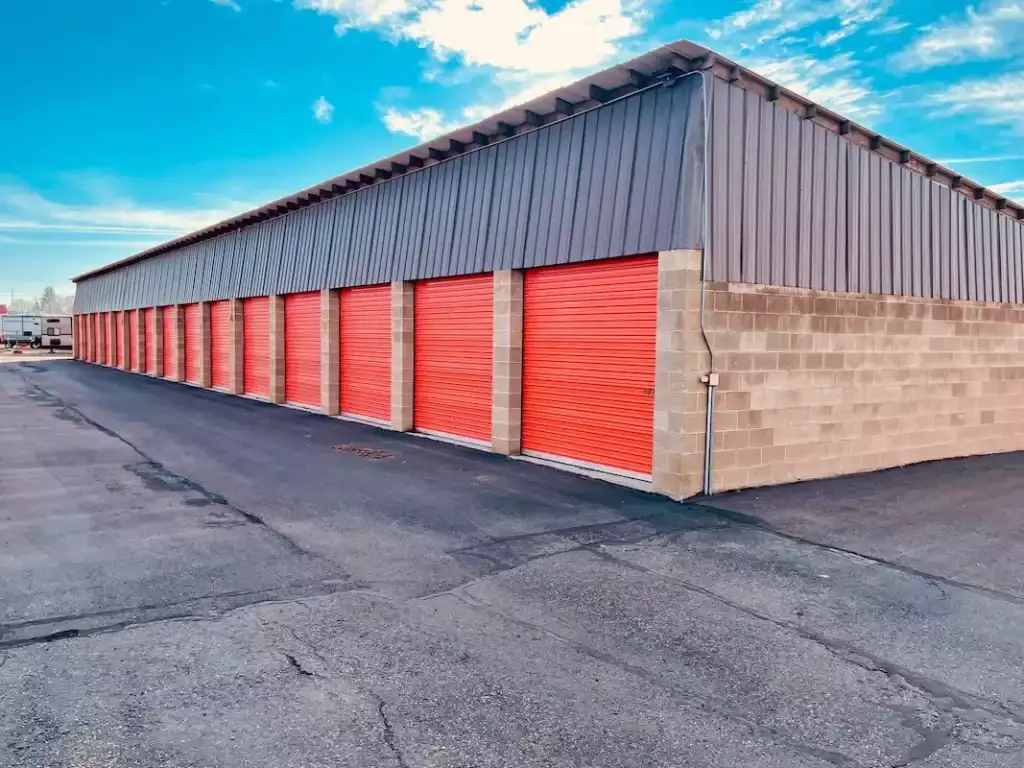
- Drive-up units. Single-story buildings where the tenant parks at the door. They are usually the simplest and cheapest to build. They suit tools, business stock and large furniture.
- Climate-controlled units. Indoor space held within a set temperature and humidity range. They suit wood furniture, electronics, papers and clothing. They cost more to build and run because of the heating, cooling and insulation.
- RV, boat and vehicle storage. Open parking, covered parking or enclosed bays. This type fits a region with lakes, rivers and campgrounds. Canyon Lake is a large recreation lake in Comal County, so ask whether boat and RV owners nearby need space. The lake was about 97.7 percent full on October 11, 2026.
The right mix depends on who lives nearby. Boat and RV owners near the lake need different space than households in a new subdivision. You answer that by looking at the neighborhood around the site.
What it means for you. Decide which tenant you are building or buying for before you look at a single property. A facility with the wrong unit mix can sit partly empty even when the town is growing.
How the money works
A few terms come up in every storage listing.
- Net operating income (NOI). Income from the property minus the cost of running it, before loan payments and income tax.
- Cap rate. NOI divided by the price. A property earning $100,000 a year in NOI and priced at $1,000,000 has a cap rate of 10 percent. It helps you compare properties. It does not tell you whether the NOI will hold.
- Physical occupancy. The share of units that are rented.
- Economic occupancy. The rent actually collected compared with the rent the facility would collect if every unit were full at the posted rate. Discounts, free months and late payers pull it below physical occupancy.
- Unit mix. The count of each unit size and type.
Ask a seller for the last twelve to twenty-four months of rent rolls, the collections record and every discount given. Compare what the facility posts online with what tenants really pay. A facility can look full and still collect little.
What it means for you. Price the facility on collected income and on costs you can verify, not on a posted rate or a sales pitch.
What it costs to build or buy
We do not have a reliable local cost per unit or per square foot for storage, so we do not give one. These are the figures we can trace.
- National construction input prices for nonresidential building were about 8.9 percent higher in August 2026 than a year earlier, according to an analysis of federal data published by the Associated General Contractors on September 10, 2026. Ask a builder to price your plan now, not from last year’s numbers.
- Bank prime was 7.00 percent on October 9, 2026. The federal funds target was 3.75 to 4.00 percent after the September 16, 2026 decision. Borrowing for a new building costs more than it did when rates were lower.
- Site work can cost as much as the buildings. Grading, drainage, paving, gates, fencing, lighting, cameras, power and water all belong in the budget. A lot beside a creek or in a floodplain may need added engineering and a raised building pad.
Buying an existing facility avoids construction risk but brings other risks: old roofs, worn doors, outdated software and tenants on old rates. Get a roof and paving inspection and a full review of the rental records before you close.
What it means for you. Get written bids for the whole site, not only the buildings, and a lender’s quote on your actual deal. Then test whether the numbers hold at lower occupancy than the seller shows.
What a buyer checks
Zoning and where storage is allowed
Not every commercial lot allows storage. Some cities and counties limit it to certain zones, require a special permit, or set rules on building height, lighting, screening and outdoor parking. Outdoor RV and boat parking often faces its own limits. Ask the planning office in writing. For land outside city limits, ask the county about site development, septic and water rules. Our Comal County page covers the local setup.
Drainage and floodplain
Look up the parcel on the federal flood map. FEMA’s regulatory floodplain is the area with about a 1 percent chance of flooding in any year. Our floodplain definition explains more. A parcel just outside the mapped line can still flood. Water inside a storage building ruins what tenants stored, and tenants may claim against the owner. Most commercial property policies exclude flood damage, so ask your insurance agent about flood coverage before you buy.
The Hill Country has had deadly floods. Floods on July 4, 2025 and July 16, 2026 were centered on the Guadalupe River in Kerr County and downstream areas such as Comfort. Study the creek, the slope and the drainage on any site you consider. Our report on Comal County’s water goes further into water and flood questions.
Access and visibility
Tenants choose a facility close to home or work and easy to find. Check the road, the turn lanes, the driveway width and the turning room for a truck pulling a trailer or an RV. A gate that makes a vehicle wait in the road is a design defect. Look at how traffic flows past the site and whether road work is planned nearby.
Security
Fences, keypad gates, lighting and cameras are standard. Ask how long camera video is kept and who watches it. Ask what loss claims the facility has had and how they were handled.
Management
Storage is often called hands-off. It is less hands-off than it sounds. Someone answers calls, collects rent, handles late payments, fixes doors and keeps the grounds clean.
An owner-run facility saves the management fee but costs the owner time, and it stops when the owner is sick or away. A third-party management company takes over daily work and usually charges a share of revenue. Ask what it covers, how it reports and how you can end the contract. Put whichever route you pick into the numbers. An owner who plans to self-manage and later finds the time cost too high ends up paying for management anyway.
Online presence
Check how the facility appears on maps and in search results, whether the website shows sizes and rates, whether tenants can reserve and pay online, and what reviews say. Weak listings can slow a fill-up for reasons unrelated to the property.
Local competition
Count the existing facilities within a short drive. Then ask the planning office what has been approved or permitted but not yet built. Visit each competitor, look at posted rates and see what is empty. We have no local storage supply count, so this legwork falls to you or your advisor.
For a look at building activity next door to storage, Comal County had about 773,000 square feet of industrial space under construction in September 2026, about 3.4 percent of existing industrial space. That figure covers all industrial buildings. It is not storage. It does show that new building is under way in the county.
What it means for you. Treat these checks as gates. If a site fails zoning, flood or access, no rent assumption fixes it.
Risks to weigh
- New supply. Storage is easy to build and a small market has a limited number of tenants. One or two new facilities can change occupancy for the existing ones.
- Operating work. Rent collection, discounts, marketing and staffing take steady effort and show up in NOI.
- Rates and financing. A higher loan cost leaves less cash after payments. Ask the lender how much equity it wants for a new build.
- Weather and flood. Hail, wind and flood damage a facility, and insurance may exclude some of it.
- Taxes and insurance. Both change over time and vary by taxing district. Ask for the actual bills, not the seller’s estimate.
Nothing here says storage will fill, rents will hold or a site will pay off. Those depend on the site, the price and the competition when you buy.
What it means for you. Run your numbers at lower occupancy, higher costs and a higher loan rate than the seller shows. If the deal works only in the seller’s best case, it is a thin deal.
How storage is valued
Buyers and lenders usually look at income actually collected over the last twelve months, not at projections. A seller’s plan to raise rents or fill empty units is a story until tenants pay. Expect a buyer to ask for monthly deposits, bank statements and rent rolls that agree with each other.
Check the rates tenants pay against the posted asking rent. Some facilities rent to new tenants at a low first-month rate and raise it later. Ask how many existing tenants have had increases, and how many left afterward.
Value usually comes from NOI divided by a cap rate. Small changes in the cap rate move the price a lot, so ask what cap rate the buyer is using and where it came from. A cap rate quoted without a source is an opinion.
What it means for you. Value the facility on collected income you can prove. Treat anything else as upside you do not pay for.
Phased building and lease-up
A new facility does not fill the day it opens. The time it takes to rent up is called lease-up, and during it the owner pays loan interest, taxes, insurance and utilities on units that earn nothing yet.
Some owners build in phases. They put up the first buildings, rent them, and add more only if demand shows up. This spreads out the cost and cuts the risk of building more than the area will rent. The tradeoffs are real. The site plan, drainage, utilities and permits need to allow later phases from day one, and the second round of construction may cost more or less than the first. Lenders may also finance phases separately.
What it means for you. Budget for months of costs with little income. Ask your lender whether the loan covers that period.
Other income
Rent is the main source of income, but facilities collect other money too. Common categories are administrative fees when a tenant signs up, late fees, tenant protection plans, truck rental, retail supplies such as locks and boxes, and rent from outdoor vehicle parking.
Ask what share of income comes from each and whether the seller’s books show them separately. Late fees and one-time fees are less steady than rent. Truck rental and protection plans may come with a contract or a revenue share with another company, so read it. Rules can apply to fees and to how insurance-type products are sold, so check with an attorney.
What it means for you. Count steady rent first. Treat fees and add-ons as extra, and confirm they can transfer to a new owner.
Insurance and abandoned units
There are two sets of coverage, and they are not the same. The owner carries property insurance on the buildings and liability insurance for injuries on the site. The tenant’s goods inside a unit are the tenant’s risk, and the owner’s policy generally does not cover them. Many facilities require tenants to show coverage or buy a protection plan.
Make sure the lease says plainly who is responsible for the contents. Then ask an insurance agent what your policy covers, what it excludes and what a flood, hail or wind loss would look like. As noted above, most commercial property policies exclude flood damage.
What it means for you. Get quotes before you offer on a property. Insurance cost belongs in the numbers, not after closing.
Abandoned units
Sooner or later a tenant stops paying and stops answering. Texas law sets a process for owners of self-storage facilities to place a lien on a tenant’s stored property and, if the rent stays unpaid, to sell it. The process involves written notices and deadlines. Skipping a step can expose the owner to a claim from the tenant.
Ask an attorney to review the lease and the collection process before you act on any unit. Ask a seller how many units are in default, how long they have been, and how the seller handled past sales.
What it means for you. A unit that earns nothing and cannot be cleared stays off the market. Follow the legal process each time.
Selling later and property tax
Think about the exit before you buy. Buyers of storage facilities range from local owners to investors from outside the area, and they tend to look at the same things: collected income, occupancy over time, condition, nearby competition, management and the cost of taxes and insurance. A facility with clean books and documented records is easier to sell.
The county appraisal district values the property for tax purposes, and the taxing units set their own rates. A purchase price does not set the appraised value, and the appraised value can differ from what you paid. Ask for the current tax bill, check which taxing districts apply, and read our guide to Texas property tax changes in Comal County. Ask a tax professional how a purchase may change the bill.
What it means for you. Keep clean records from the first month. They help with a loan, a sale and a tax appeal.
Paying for it
Lenders look at the borrower’s experience, the property’s income and the equity in the deal. Our guide to commercial property loans in Texas covers loan types and what lenders ask for.
If you will run the business yourself, an SBA 7(a) loan may be an option. These loans have rules about who qualifies and how the property is used. The maximum rate on variable loans over $350,000 is prime plus 3 percentage points. With prime at 7.00 percent, that works out to a ceiling of 10.00 percent as of October 2026. Your lender sets the actual rate. Ask your CPA and your lender which program fits.
A storage facility is an operating business, not a building leased to one tenant. The logic is close to the one in our guide to buying an RV park in the Texas Hill Country, where income depends on day-to-day operations.
What it means for you. Talk to a lender early. Ask what they need to see, how much equity they want and how they treat a new facility with no operating history.
Common questions
Is self-storage a safe investment?
No investment is safe. Storage has simple buildings and month-to-month rent, but results depend on occupancy, nearby competition and your costs.
Do I need climate control?
Not always. Many tenants only need a dry, secure unit. Look at what nearby facilities offer and charge before you add the cost.
Is RV and boat storage a fit near Canyon Lake?
It is worth studying, because boats and RVs are common in the area. Confirm zoning for outdoor parking and check how many nearby lots already offer it.
Can I build storage on any commercial lot?
No. Ask the city or county planning office what the zoning allows.
Do I need flood insurance?
Ask your insurance agent. Most commercial property policies exclude flood damage, and a lender may require flood coverage on some sites.
Should I buy or build?
Buying gives you tenants and records along with older buildings. Building gives you a design you choose, along with construction cost and a lease-up period before it is full.
The bottom line
Self-storage is a simple business with real work in it. It earns rent from many small tenants, and the result depends on the site, the price and the competition near you. Comal County is adding people faster than the nation, but that fact alone does not tell you a particular facility will fill.
Start with zoning, flood and access. Then price the full project, test the numbers at lower occupancy, and look at what else is being built nearby.
At Blue Collar Commercial Group, we help owners and investors check a storage site or an existing facility before they commit. Contact our team to talk it through.
First published in June 2025. Rewritten in October 2026. Population figures are from the U.S. Census Bureau (March 2026). Interest rate figures are from the Federal Reserve (September and October 2026). Construction cost and insurance points come from the Associated General Contractors (September 2026) and the Texas Department of Insurance. Lake level is from the Texas Water Development Board (October 11, 2026). Industrial figures are brokerage market data through September 30, 2026. This article is general information. It is not investment, legal, tax or financial advice.



