

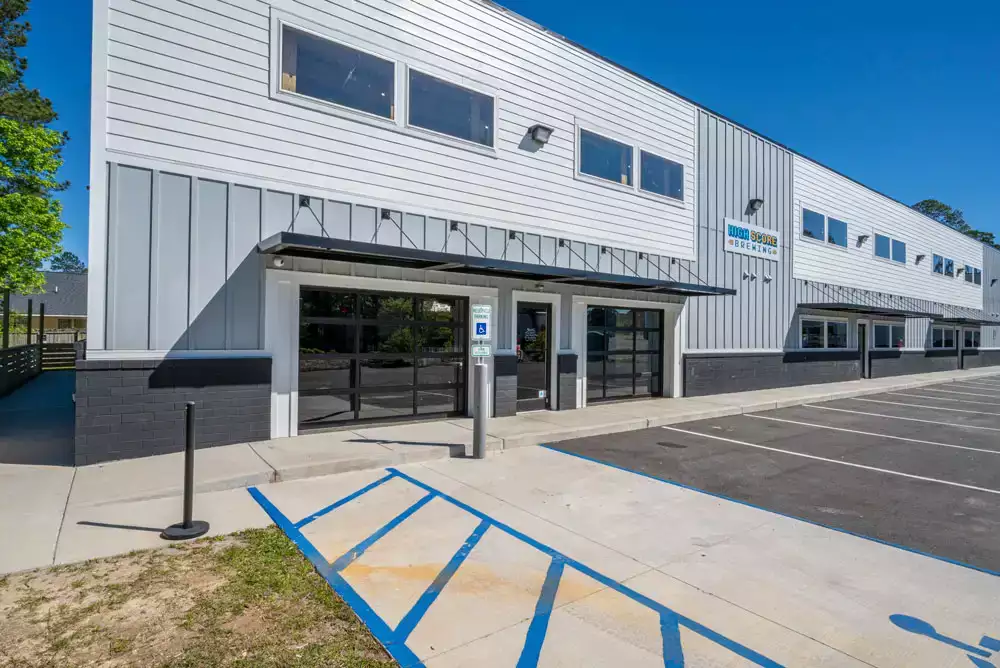
Updated October 2026. This is the investor companion to our two guides for business owners who plan to use their own unit. It covers what flex and small-bay buildings are, who rents them, what the local numbers say as of September 2026, and what to check before you buy, build or hold one in Comal, Guadalupe, Hays and the San Antonio area.
The quick answers
- What is flex space? A one-story building with an office or showroom up front and shop or warehouse space behind it, usually split into several small units with roll-up doors.
- How full is flex space? Flex vacancy in Comal County was about 8.5 percent in September 2026, against about 4.6 percent at the end of 2025. Hays County was about 20 percent.
- Who rents it? Mostly local service businesses such as contractors, HVAC and plumbing companies, small makers, small distributors and gyms.
- How do the leases work? Most are triple net, which means the tenant pays property taxes, insurance and upkeep on top of base rent. Terms are often one to three years, so the owner is leasing all the time.
- Buy or build? Buying gives you leases and operating statements you can read. Building gives you a new product but puts land, utilities, permits and construction cost on your side of the table. Each needs its own math.
- Does it pay? Nobody can promise that. It depends on the price, the tenants, the loan and the building, not on the label “flex.”
What changed in this update
As of September 2026, about 8.5 percent of flex space in Comal County was empty, up from about 4.6 percent. Guadalupe County went from about 4.4 percent to about 9.7 percent. The San Antonio area moved from about 7.8 percent to about 9.2 percent. Hays County rose from about 15.8 percent to about 20.2 percent. The Austin area was about flat, near 13 percent. The rest of this guide is built on those numbers.
What flex and small-bay space actually are
Flex space is a building that mixes office, showroom and warehouse under one roof. A small-bay building is the same idea described by unit size. The units are small, commonly somewhere between 1,000 and 10,000 square feet, with a ground-level roll-up door so a work truck can pull in. Many buildings are both. You can read the short definition on our small-bay glossary page.
It helps to compare flex with the two property types it sits between.
- Against a traditional warehouse. A big distribution building is mostly open storage with a small office and many truck docks. Flex gives more of the floor to finished office or showroom, has a friendlier front with more glass, and usually has lower ceilings.
- Against a traditional office building. Flex is almost always one story, with parking at the door and a roll-up door for the shop side. The tenant walks in at ground level. That is a different product from a multi-story office.
The features that decide who will rent it
For an investor, the physical features are not trivia. They set the pool of tenants who can use the building at all.
- Office share. A tradesman may want almost all shop and a small front office. A design firm or a showroom user may want half the unit finished as office. A building that can serve both is easier to lease.
- Ceiling height. Flex ceilings tend to be lower than in large logistics buildings. A height that allows racking or a vehicle lift is usually enough for the tenants in this corridor.
- Doors. Ground-level roll-up doors fit vans and box trucks. Some tenants need a raised dock for freight trucks. A building with both reaches more tenants.
- Electrical power. Shops that run machines need heavier service, often called 3-phase power. Ask the utility what the building has and what an upgrade would take.
- Parking and truck room. Flex draws employees, customers and deliveries. Count the spaces and check that a truck can turn around.
- Walls between units. Buildings designed to be divided are easier to re-cut when tenants grow or leave.
- Construction type. Most are concrete tilt-wall or pre-engineered metal. Both are cost-effective. Neither removes the need to inspect the roof.
Levels of finish
Flex runs from basic to polished. A basic flex warehouse has a small office and open shop space, and it serves trades and small distributors. A standard office-warehouse has a finished reception area, private offices and separate air conditioning for the office. A showroom building has a glass front and signs, and it suits businesses that bring clients in. A fourth group, sometimes called tech or lab flex, needs heavy power, extra cooling and reinforced floors. That last group is rare in this part of Texas.
What it means for you. Before you look at rent, decide which tier the building really is. A building with low ceilings and light power cannot chase the tenants a newer building can, and the price you pay should reflect that.
Who rents flex space, and why that matters to an owner
Tenants in this part of Texas are mostly businesses that follow new homes and new customers.
- Home and building services. Plumbers, electricians, HVAC companies, roofers, landscapers, pool builders and restoration crews. They need a place to park trucks and store parts.
- Local delivery and small distribution. Operators that stage goods close to the customers they serve.
- Small makers. Cabinet shops, metal fabricators, sign makers, breweries and light assembly.
- Other users. Gyms, sports training, auto restoration, online sellers storing their own stock, and some office users who want a ground-floor front door.
That mix is the main argument for the asset type. No one tenant decides whether the building works. The other side is that these tenants are small businesses. Some will outgrow the unit, some will close, and some will pay late. An owner of a flex building is a landlord to many small companies, which is more hands-on than owning one big warehouse leased to one large company.
What it means for you. When you read a rent roll, read it as a list of businesses. Ask what each one does, how long it has been open and what happens to its income if home building slows.
What the local numbers say as of September 2026
These figures come from brokerage market data through September 30, 2026. Rent is asking rent, which is what landlords are requesting, not what tenants have signed. We annualized the monthly figures by multiplying by 12.
| Market | Flex empty, Sept. 2026 | Flex empty, end of 2025 | Asking rent per sq. ft. per year |
|---|---|---|---|
| Comal County | about 8.5% | about 4.6% | about $16 |
| Guadalupe County | about 9.7% | about 4.4% | about $14 |
| San Antonio area | about 9.2% | about 7.8% | about $16 |
| Austin area | about 12.6% | about 13.0% | about $19 |
| Hays County | about 20.2% | about 15.8% | about $18 |
Brokerage market data through September 30, 2026. San Antonio-area figures cover the metro, not only Bexar County.
How to read the table
Vacancy rose in most of our corridor. Comal and Guadalupe County flex vacancy roughly doubled in nine months. San Antonio and Hays rose too. The Austin area was essentially unchanged.
Flex versus larger industrial space depends on the county. In Comal County, about 13 percent of large logistics space was empty in September 2026, against about 8.5 percent for flex. In the San Antonio area, small logistics buildings under 50,000 square feet had vacancy about 8 points below the largest buildings. In Guadalupe and Hays counties it ran the other way, with flex more empty than industrial space overall.
The local flex market is small. Comal County had a little under 800,000 square feet of flex space in total, and Hays County about 1.5 million. In a market that size, one new building can move the vacancy rate by several points. A four-point rise does not by itself tell you demand fell. It may mean a new building opened and has not leased up. Ask which.
What it means for you. A county average is a starting point. Your building competes with the three or four buildings nearest it. Walk them, ask what they are asking, and ask how long their empty units have been empty.
What supports demand
- Population. Census estimates released in March 2026 put annual population growth in the counties we track between about 2.5 and 3.8 percent. New homes need services, and service companies need places to park trucks. Net migration into Texas has slowed since 2023, so growth is continuing at a lower pace.
- Delivery close to customers. Smaller buildings near homes suit businesses that serve neighborhoods.
- Small business formation. Small firms need space that costs less than an office tower and is smaller than a distribution warehouse.
- The wider economy. The Dallas Fed’s September 2026 forecast was for modest Texas job growth, and its September banking survey showed tighter lending standards for commercial property.
What it means for you. Flex has a wide tenant mix, but demand has to show up building by building. Prove that the building you are looking at fills.
If you are thinking of buying an existing building
Most flex in this part of Texas is owned by local individuals, small partnerships or the businesses that occupy it. That means some buildings are never listed. Leads come from calling owners, talking to the lenders and contractors who work in the area, and asking our team about buildings that may trade quietly. Treat any listing as a starting point for your own checks.
Look at the building
Have an inspector check the roof, air conditioning, power, paving, drainage, doors and accessibility, as covered in our straight guide to small-bay and flex space.
Look at the money
- Every lease. Confirm the rent roll against the signed leases, including end dates, renewal options, deposits and who pays what.
- At least three years of operating statements. Look for costs that jumped, rents that stayed flat, and repairs that were put off.
- Payment history. Ask for each tenant’s record of paying on time, and whether anyone has asked for a break.
- Tenant mix. A building with several different trades is less exposed than one with a single industry.
Look at the paperwork
- Title and survey. Confirm the seller can sell it and find any liens or easements.
- Zoning. Check with the city or county that today’s uses are allowed. Do not accept the seller’s word. For Comal County, start with our zoning overview.
- Environmental review. A Phase I environmental site assessment is a standard report that looks for contamination from past use. It is common on industrial property.
- Service contracts. See whether landscaping, management and security contracts transfer and what they cost.
- Floodplain. Check the maps. See our glossary pages for the floodplain and the floodway.
Buying a unit instead of the whole building
Some small-bay buildings are sold unit by unit as commercial condominiums. An investor can buy one or two units and lease them. The documents differ from an ordinary building purchase. Read the owners’ association rules, its budget, its reserve for shared items such as the roof, and what the rules say about who may occupy a unit.
What it means for you. Hire the inspector, the surveyor and the lawyer before the deadline, not after it. If you cannot get the leases and the operating statements, that is information too.
How investors value and underwrite a flex building
An appraiser or lender will usually weigh three things. The income approach divides net operating income, which is rent and other income minus vacancy and operating costs, by a capitalization rate taken from recent sales of comparable buildings. Sales comparison looks at similar buildings that sold recently. The cost approach adds land value to the cost of building the structure, less wear.
The questions that carry the model
Most of the work is in the assumptions, not the formula. Before you accept a seller’s pro forma, ask these.
- What is in place today? Use signed leases for income already in place. Be careful with the rent the seller says a vacant unit could get.
- What rent is real? Compare asking rents with what comparable buildings have actually signed. The table above shows asking rents, not signed ones.
- How much vacancy should you plan for? Use the nearby buildings, not only the county. September 2026 flex vacancy was around 8 to 10 percent in much of our corridor and about 20 percent in Hays County. Your model should be at least as cautious as the building’s own history.
- How long does a vacant unit sit? Ask for the history of each unit. A model with no downtime between tenants is not a careful one.
- What does re-leasing cost? Add the tenant improvement allowance, which is what the landlord pays toward a tenant’s build-out, plus any leasing fee and free rent.
- What are the big repairs? Put reserves in for roof, paving and air conditioning. Under a triple net lease the tenant usually pays routine upkeep, but major repairs and replacements are often argued about. Read the lease.
- Which costs are passed through? Property taxes, insurance and common-area costs are usually billed back. Ask what each tenant actually paid last year. The state’s temporary cap on appraisal increases for qualifying non-homestead property is set to expire at the end of 2026 unless lawmakers renew it. It limits how fast appraised value can rise, not the tax bill itself.
- What happens in a slower year? Run one case where two tenants leave. If the loan cannot be paid in that case, the structure is thin.
Return measures such as cap rate, cash-on-cash return and internal rate of return are only as good as the numbers underneath them. We do not quote target ranges, because a target says nothing about what a given building will earn. Ask your CPA and your lender to check your model.
What it means for you. If the deal only works when vacancy is near zero, you do not have a deal yet. Work backward from a bad year.
Leases
Most flex leases are triple net and small tenants often sign for one to three years, so read each lease for term, rent steps, who pays repairs, the permitted use, deposits and any personal backing from the owner. Our lease guide explains the types. For the tenant’s side and the rent-or-buy question, see our guides on renting or buying a small-bay unit on I-35 and on renting or buying a shop in New Braunfels and San Marcos. We do not repeat that math here.
What it means for you. A lease is only as good as the tenant behind it. Ask for a picture of the tenant’s finances before you rely on the rent.
Financing
Which loan fits depends on who will use the building and how finished it is. We are not lenders, and every figure should come from a lender’s written quote.
- Conventional commercial mortgage. This is the usual tool for an existing building with leases in place. Banks and credit unions look at the rent roll, the tenants and your own finances.
- SBA 504 and 7(a) loans. These programs are designed for owner-occupants. If your own business will fill most of the building, they can fit. A pure investor generally does not qualify. See our glossary pages for the SBA 504 loan and the SBA 7(a) loan.
- Construction loan. For new construction. These are short-term and are paid out in stages as work is finished. They are repaid with a long-term loan once the building is leased, so lenders look closely at pre-leasing.
- Bridge loan. A short-term loan used for speed or while a building is repositioned. It usually costs more. Have a plan for the end date.
- Seller financing. Sometimes an owner carries part of the price. See our glossary entry.
The Federal Reserve’s target rate was 3.75 to 4.00 percent after a September 2026 increase, and the 10-year Treasury yield was about 5.24 percent on October 9, 2026. Those are benchmarks lenders price from, not quotes for your loan. SBA 504 rates posted in October 2026 were roughly 6.6 to 7 percent, and they apply to the SBA portion of the loan only, not to the blended cost of the whole package.
Lenders usually size a loan from two limits. The first is a share of the building’s value or cost. The second is a coverage test, which requires the building’s income to exceed the loan payment by a margin the lender sets. Ask each lender for its own numbers in writing, and test your model against the stricter of the two.
Our guide to commercial property loans in Texas goes through each type.
What it means for you. Get a lender in the room before you get under contract. The loan is the part of the deal most likely to change your price.
If you are thinking of building
A new building lets you design for tenants and avoid someone else’s deferred repairs. It also puts every problem a site can have in front of you. The order below is the order in which a project tends to run into trouble.
- Zoning first. Is flex or light industrial allowed on the parcel today, with no special approval? Rezoning is slow and the answer may be no. Check with the city or county before you check anything else.
- Utilities in writing. Water, sewer and power from the actual provider, with timing and cost. Heavy electrical service is the key item for shop tenants. In parts of the Hill Country water is the deciding factor. Our Hill Country water article covers the details.
- Location. Flex works near homes and customers with easy access from the highway. Look at what roads are changing near the site, such as the projects described in our Highway 281 construction guide.
- Land cost and ground. Flat, well-drained land costs less to prepare. Ask a civil engineer about grading, drainage and any floodplain on the site.
- Approvals. Expect a pre-application meeting with the city, then zoning and platting where needed, review by engineering, utilities and fire staff, public hearings in some cases, and finally site and building permits. Each city runs its own timeline. Ask the staff for theirs and add margin.
- Cost. Get a current bid from a contractor that includes site work and utility connections. Do not rely on a rule of thumb. The Associated General Contractors of America reported on September 10, 2026 that nonresidential construction input prices were about 8.9 percent above a year earlier, and a contractor’s cost index showed completed-building costs up about 5 percent in the year to the second quarter of 2026. The two measure different baskets. Either way, an old bid may be out of date.
- Tenant finish costs. The share of the building that is office drives the cost, because office needs more cooling, wiring, plumbing and finishes than shop space. Decide whether you will build the shell only and finish each unit when a tenant signs.
- Lease-up. With vacancy up and new buildings competing, ask how much space the market is leasing and how long your lender will wait. Vacancy was rising in most of our markets as of September 2026.
Design choices that help a building lease
Roll-up doors, real electrical capacity, enough parking and truck room, and a clean front are the features tenants ask about first. See our straight guide for more.
Local flex is a small market, and building cost and loan rates are higher than many owners planned for. If you can buy a building that already has tenants for less than it would cost to build, compare the two on equal terms.
What it means for you. A new building needs three things to go right at once: the site works, the cost holds and tenants arrive. Buying removes some of those unknowns and adds others. Neither route is safer by default.
Running the building
Replacing a tenant costs downtime, tenant improvements and marketing, so keeping good tenants matters. Answer repair requests quickly, service the air conditioning on a schedule, inspect the roof yearly and budget for paving. A management company charges a share of collected rent, and for an owner who lives elsewhere it may be worth it.
Owners sometimes add value by refreshing the front, dividing a large industrial building into smaller units, adding doors or adding security. Each costs money and none ensures higher rent, so price a project against the rent comparable buildings are actually getting. If you own through a business entity, ask your CPA about depreciation. Federal law changed in 2025, and our bonus depreciation guide covers the basics.
What it means for you. The owners who do best stay close to the building and its tenants. If that will not be you, budget for someone who will be.
The risks, in one place
- Vacancy and size. Flex vacancy rose in four of our five markets between the end of 2025 and September 2026, and in small markets one new building can move the average.
- Tenants. A small business can close or outgrow its unit, and a dark unit costs downtime plus re-leasing.
- Money. Benchmark rates are high, lenders reported tighter standards in September 2026, and construction bids age quickly.
- Site and rules. Water, power and roads decide what can be built in parts of the Hill Country, and the temporary appraisal cap ends after 2026 unless renewed.
For local detail, see Comal County, Guadalupe County and Hays County, or our industrial for landlords and industrial for buyers pages.
What it means for you. Write down which risks you can absorb and which you cannot. A deal that needs all of them to go well is a thin one.
Common questions
Is flex space a good investment in Texas?
It can be for some buyers and not for others. It has a wide tenant base. In Comal County and the San Antonio area it was less empty than the largest warehouses in September 2026, but in Guadalupe and Hays counties it was not. Vacancy rose in 2026 and the local markets are small. Judge the building, its tenants and its price, not the category.
What is the difference between flex and small-bay?
Small-bay describes size: small units in a building shared by several tenants. Flex describes layout, with finished office or showroom space in front and shop or warehouse space behind. Many buildings are both.
How long are flex leases?
Often one to three years for small tenants, sometimes longer with renewal options. Shorter leases let rents adjust more often and bring more turnover.
Can I use an SBA loan to buy a flex building as an investor?
Generally no. SBA programs are meant for owner-occupants, which means your own business has to use most of the building. Talk to a lender who makes these loans regularly.
What rent should I assume for a flex unit?
Brokerage data for September 2026 shows asking rents from about $14 to about $19 per square foot per year across our markets. Use signed leases on comparable buildings for your own model.
Should I build or buy?
It depends on the price of existing buildings against the cost to build today, how fast new space is leasing nearby, and whether you can get a site with the right zoning and utilities. Get quotes on both before you decide.
The bottom line
Flex and small-bay buildings serve the businesses that keep a growing region running, and that gives them a broad tenant base. As of September 2026, about 8.5 percent of flex space in Comal County was empty, about 9.7 percent in Guadalupe County and about 20 percent in Hays County.
The building, the lease and the price carry the decision. Run the model for a slower year, and get the loan, the zoning and the utilities in writing before you are committed.
At Blue Collar Commercial Group, we help investors and owners size up specific flex buildings and sites in the Hill Country and along the I-35 corridor. Contact our team to talk it through.
First published September 2025. Rewritten October 2026. Flex figures come from brokerage market data through September 30, 2026, rounded. Interest rate, appraisal cap and construction cost figures come from the Federal Reserve, the U.S. Treasury, the Texas Comptroller and the Associated General Contractors of America, as of the dates stated. This article is general information. It is not investment, legal, tax or financial advice.



