

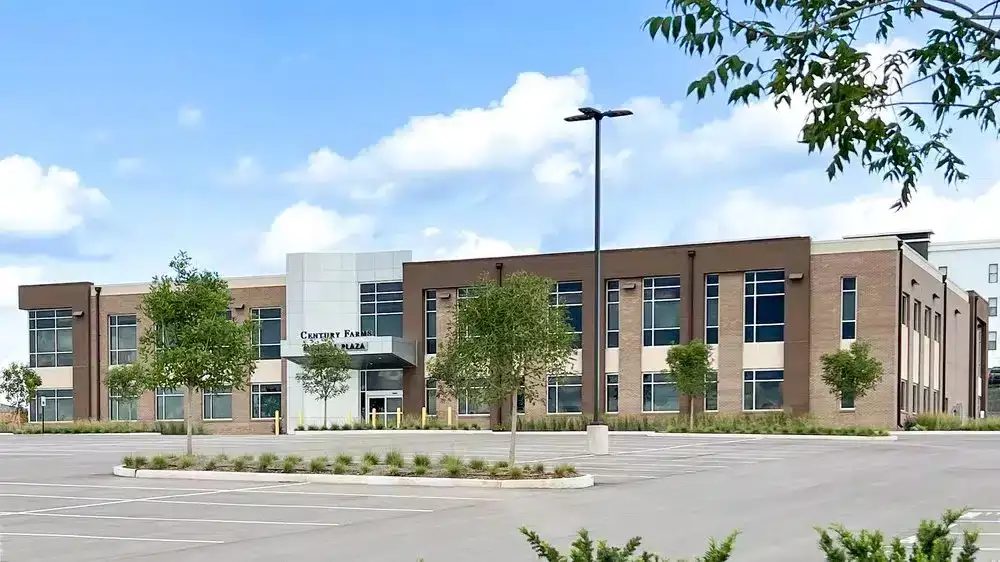
Updated October 2026. This guide is for investors and developers looking at medical office buildings between San Antonio and Austin. It covers how medical space differs from ordinary office, how leases are set up, the questions to ask before you buy, and the steps to build one. If you are a doctor or dentist looking for space to use, start with our guide to medical office space in Comal County.
The quick answers
- What makes a medical office building different from a regular office? The suite is built around the practice. Plumbing in every exam room, heavier power, special air handling and reinforced walls or floors for equipment. That raises the cost to build and the cost to re-lease.
- Do we have medical-only market numbers? No. The local figures here cover all office space in each county, not only medical. Ask for medical-specific figures on any building you study.
- How much office space was empty in September 2026? About 2.6 percent in Guadalupe County, 3.9 percent in Comal County, 7.1 percent in Hays County, 10 percent across the San Antonio area and 15.9 percent across the Austin area.
- What do medical leases look like? Often triple net, where the tenant pays taxes, insurance and upkeep, with set rent increases and a negotiated allowance for the build-out.
- What is the biggest risk? A suite built for one specialty that sits empty when the tenant leaves. Re-leasing can mean paying to tear out and rebuild.
- Is a medical building a safe investment? No investment is safe. Tenant credit, lease length, borrowing costs and building cost all vary by property.
What changed in this update
The market numbers are now as of September 30, 2026. The Federal Reserve raised its target rate on September 16, 2026, and national nonresidential building input prices were about 8.9 percent above a year earlier in August 2026. Over the past twelve months, office vacancy fell in four of the five markets covered here and rose in Hays County.
What makes medical office different
A medical office building is an office building fitted out for clinical work. The tenants are physician practices, dentists, therapy clinics, imaging and lab services, and sometimes outpatient surgery centers. The difference shows up in the walls, the pipes and the parking lot.
Plumbing and power
A general office needs a restroom core and a break room. A medical suite needs water and drains in every exam room, and often in procedure rooms and labs. Dental suites add vacuum and compressed air lines. Imaging rooms may need lead-lined walls and extra structural support for heavy machines. Power demand is higher, and some equipment needs its own circuits or backup power. All of this is easier to build into a new shell than to add later, so ask what the building was designed to carry before you look at a single lease.
Air handling
Clinical space often needs more fresh air, tighter control of pressure between rooms, and separate handling for certain areas. Ask the engineer for the system’s capacity, its age and what each suite connects to. A building with one rooftop unit per suite is easier to adapt than one that shares a single system across the floor.
Parking, accessibility and privacy
Parking counts, accessibility standards and patient privacy rules all shape what a medical suite can be. The city or county code sets the details for each use, so confirm them for your exact site. Our guide for doctors and dentists covers these from the user’s side.
What it means for you. The extra features are what make the space useful to a practice, and they are also what make it costly to build and costly to change. Price both before you buy.
Leases, tenant credit and risks
Two buildings with the same square footage can be worth very different amounts depending on who pays rent, for how long and on what terms. Start with the leases.
Lease length
Moving a medical practice is costly and disruptive, which can make tenants willing to sign longer leases. The lengths in your market are something to confirm from the leases in front of you. Ask for the original lease date, the remaining term, renewal options and any early termination rights.
Who pays what
Three setups come up most often.
- Triple net (NNN). The tenant pays rent plus its share of property taxes, insurance and building upkeep. The landlord’s income is more predictable, and the tenant takes the cost swings.
- Modified gross. The tenant pays a base rent and the landlord covers some costs, often with the tenant paying increases above a base year.
- Full service. One rent covers nearly everything. The landlord carries the cost risk.
The rent quoted in market data is an asking rent, what landlords are quoting before allowances and free rent. Our glossary entry on asking rent explains the difference. Find out which setup a quoted rent assumes before you compare two buildings.
Rent increases and the build-out allowance
Many medical leases include fixed annual increases or increases tied to an index. Check whether each is a flat amount or a percentage that compounds. Landlords also often give a tenant improvement allowance, a set amount per square foot toward building the suite. Medical build-outs can cost more than the allowance, so find out who pays the rest, who owns the improvements at the end, and what happens to fixed features such as plumbing stubs and lead-lined walls.
Tenant credit
A medical tenant may be a single physician, a group of partners, a practice owned by an investment firm, or a unit of a hospital system. Each has a different credit profile.
- Single-physician practice. The practice depends on one person. Ask the doctor to sign the lease personally, and ask what happens if the doctor retires or moves.
- Group practice. Check how long the group has existed and what the partnership agreement says about a partner leaving.
- Practice owned by outside investors. The owner may sell or combine practices. Check who stands behind the lease and whether it can be assigned.
- Hospital-system tenant. The credit may be stronger, but the system can consolidate or close locations. Read the termination language.
In each case ask for financial statements, a personal signature on the lease where one is available, and a security deposit sized to the risk. Have your lawyer read the assignment, subletting and change-of-control clauses.
Exclusives and use clauses
A tenant may ask for a clause that stops the landlord from leasing to a competing specialty in the same building. That protects the tenant and limits your future choices. A use clause that is too narrow can also limit who a future buyer can lease to.
Risks that come with the space
- Specialized space. A suite fitted for one specialty can be hard to lease to another. Surgery rooms, imaging rooms and dental suites each have fixed features. Ask what it costs to convert one to general office, and whether you would have to.
- Re-leasing cost. When a medical tenant leaves, you may face tear-out, a new build-out, a new allowance, free rent and a leasing commission, with rent lost in between. Put an estimate in your model and ask a contractor for a price.
- Tenant concentration. One large tenant can account for most of a building’s income. If that lease ends or the practice closes, the effect on the loan can be large.
- Tenant finances. Practices merge, change owners and close locations. Look at the tenant’s own finances and lease rather than the specialty alone.
What it means for you. When two buildings look alike on paper, compare the remaining lease terms, the tenant’s credit and the cost of an empty suite. These matter more than the building’s age or look.
What the local office numbers show
These figures describe all office space in each county, not medical office alone. We do not have a medical-only series for this corridor. They come from brokerage market data through September 30, 2026. Rent is the asking rent per square foot per month. The San Antonio figures cover the San Antonio area, which includes Bexar County. The Austin figures cover the Austin area.
| Market | Empty space, Sept 2026 | Empty space, Sept 2025 | Asking rent per sq ft per month | Rent change over 12 months |
|---|---|---|---|---|
| Guadalupe County | 2.64 percent | 3.4 percent | $2.37 | 0.42 percent |
| Comal County | 3.89 percent | 4.7 percent | $2.95 | 0.76 percent |
| Hays County | 7.12 percent | 6.61 percent | $2.87 | 1.58 percent |
| San Antonio area | 10.05 percent | 10.96 percent | $2.43 | 0.74 percent |
| Austin area | 15.89 percent | 16.54 percent | $3.72 | 1.9 percent |
Comal County has the highest share of new office space coming of the five markets, about 6.8 percent of existing office space under construction in September 2026, while nothing opened in the past twelve months. An investor in an existing building there should ask when the new space opens and which tenants it is aimed at. Hays County is the one market where vacancy rose, from about 6.6 percent to about 7.1 percent. Full detail is in the reports for Comal County, Guadalupe County, Hays County, San Antonio and Austin. Our location pages cover Comal County, Guadalupe County, Hays County, San Antonio and Austin.
A cap rate is a building’s yearly net income divided by its price. The average office cap rate in September 2026 was about 10.1 percent in Guadalupe County, 9.9 percent in Comal County and the San Antonio area, 8.2 percent in Hays County and 7.6 percent in the Austin area. These are all-office averages, and medical office may trade at a different rate. A higher cap rate means the buyer pays less per dollar of income, which can reflect more risk as well as more yield.
Between July 2024 and July 2025, the Census Bureau estimates Comal County grew about 3.8 percent, Hays County about 3.4 percent and Guadalupe County about 2.8 percent. The country grew about 0.5 percent. Population figures do not tell you which street, specialty or building will have demand.
What it means for you. Use these numbers to compare places against each other. Then get facts for the building in front of you: who the tenants are, what they pay and when their leases end.
Questions to ask before you buy
- Is there a certified rent roll, and does it match the leases and the bank deposits?
- What is the remaining term on each lease, and when can each tenant leave?
- How much income comes from the largest tenant, and does the loan payment still work without it?
- Are tenants paying rent plus expenses or one flat amount, and how were expenses billed over the past three years?
- Are there rent concessions, unpaid allowances or disputes that are not on the rent roll?
- What are the age and condition of the roof, the air systems, the plumbing and the electrical service, and is there spare electrical capacity for a new tenant?
- Does the property meet current accessibility standards, and does the city have open code issues on it?
- If the largest suite empties, what does it cost to re-lease, and could a different specialty use it as built?
- What is net income after real expenses and a reserve for roof, air systems and parking?
- What will property taxes look like next year? Texas currently limits yearly growth in the appraised value of qualifying non-homestead property to 20 percent, and that limit is set to expire at the end of 2026 unless the legislature renews it. Ask a tax advisor how it affects your building.
A simple example
This is an illustration, not a forecast and not a quote for any building. Take a 10,000 square foot building rented at the Comal County all-office asking rent of $2.95 per square foot per month, which is about $35.40 per square foot per year. The gross rent would be about $354,000 a year. From there you subtract vacancy, then expenses the landlord pays, then reserves. What is left is net income. Divide net income by the price and you get a cap rate. A lease that shifts costs to the tenant changes how much comes off the top, so run the same exercise with the actual leases, not an average.
What it means for you. The most useful single question is how the building performs if its largest tenant leaves.
Ways to invest
You can buy or build directly, join a pooled deal run by a sponsor, or buy shares in a company that owns many buildings. Each gives up some control for less work and less cash tied up, and your CPA should weigh in on the tax side before you choose. For funding a purchase or a build, see our guide to commercial property loans in Texas.
Developing a medical office building
Building new is slower and takes more money than buying, and the lease may not exist until the building does. These are the steps in order.
1. Choose the site
Start with who the building is for. A pediatric or family practice wants to be near homes. A specialist that draws patients from a wide area wants easy access from a major road. Ask whether the entrance is safe for cars turning in and out, what hospitals, labs and practices are nearby, who the competing buildings are, and whether the site has room for the required parking. For current road facts on US 281 and SH 46, see our article on Highway 281 construction projects.
2. Confirm zoning and approvals
Check that the zoning allows medical office on the exact parcel. Then come the site plan, the plat and the building permits. Rules differ between cities and unincorporated areas, so ask the planning office and get a zoning confirmation letter in writing.
3. Check utilities
Confirm that water, sewer, electric and gas reach the site with enough capacity. In parts of the corridor, service depends on a city, a utility district or a well, each with its own process. Ask each provider in writing what it takes to serve the building.
4. Study the land
Order a boundary survey, a title review, a soils report and an environmental review. Check whether any part of the site is in a mapped floodplain. A flood zone affects whether you can build, what the lender requires, and what insurance costs.
5. Build the budget
Include land, site work, the building shell, the tenant build-outs, design and permit fees, financing costs, and a contingency for surprises. Furniture and movable equipment usually belong to the tenant, so confirm who owns what. National nonresidential building input prices were about 8.9 percent above a year earlier in August 2026, according to a national contractors’ group analysis of federal data, so get current bids rather than old numbers.
6. Line up the tenants and the loan
Lenders will want to see leases or signed letters of intent, the tenants’ finances and your own. Decide with your lender how much must be pre-leased before construction starts. Our guide to moving from tenant to owner in Comal County shows the buyer’s side if you plan to sell suites to the practices that use them.
7. Design with a medical team
Hire an architect and contractor who have built medical space. Ask to see finished projects and talk to their past clients. The design should cover accessibility and privacy rules, the plumbing and electrical layout, how patients and staff move through the suite, and how a suite could be reconfigured for a different specialty later. A flexible shell costs more up front and can save money when a tenant leaves.
8. Build, then lease
Plan for the time between finishing the shell and the first rent payment. A tenant needs time to build out the suite, get licenses and move in, and your loan interest runs during that time. Confirm in the lease when rent starts and what happens if the build-out runs late.
What it means for you. Most development problems start before the first shovel: wrong zoning, no utilities, no tenant or a budget based on old costs. Spend time and a little money on those first.
Borrowing costs
The Federal Reserve raised its target for the overnight rate banks charge each other to 3.75 to 4.00 percent on September 16, 2026. One SBA lender’s posted rate for the SBA 504 portion was about 6.97 percent in October 2026 for 20 and 25 year terms. That is the rate on the SBA part of the loan only, not the blended cost of the whole package, which also includes a bank loan. The glossary has entries on the SBA 504 loan and SBA 7(a) loan.
We do not have a reliable current rate for a conventional loan on a small commercial building, because the rate depends on the loan size, the term and the lender’s view of the tenants and the borrower. Ask for written quotes from several lenders for the same building, and test every deal at a higher rate than today’s quote. If the numbers only work at the lowest rate, the deal has little room for error.
Common questions
Can I turn an empty office into a medical suite?
Sometimes. Check zoning and the parking requirement first, then price the plumbing, power, air handling and accessibility work. Decide who pays any build-out cost above the lease allowance before you sign.
Do medical tenants pay more rent than regular office tenants?
Not always. Our local figures cover all office space and do not split out medical. Look at the actual leases and compare them on the same lease basis.
Should I build or buy?
Buying gives you income now and known leases. Building lets you design for a tenant and choose the site, but you carry the construction, zoning and financing risk, and the rent starts later.
Where do I find medical-specific market numbers?
Ask for rents, vacancy and lease terms from comparable medical buildings in the same county, and ask your advisor to show where each figure comes from.
The bottom line
A medical office building costs more to put up and more to change than a general office, and the lease decides how much of that cost you can count on getting back. Read both before you buy.
The office numbers for Guadalupe, Comal and Hays counties show less empty space than the San Antonio and Austin areas, with the highest share of new space coming in Comal County. Those numbers cover all office, so use them to compare places, then get facts about the building you are studying. Building input prices are higher than a year ago, and the Federal Reserve raised its target range to 3.75 to 4.00 percent on September 16, 2026. Test the deal against a higher loan rate and a longer vacancy.
At Blue Collar Commercial Group, we help investors and developers study medical and other commercial buildings between San Antonio and Austin, from the first look at the leases to the closing table. Contact our team to talk it through.
First published July 2025. Rewritten October 2026. Office market figures come from brokerage market data through September 30, 2026. Population figures come from the Census Bureau (March 2026 release). Rate and cost figures come from the Federal Reserve, an SBA lender and a national contractors’ group, dated in the text. This article is general information. It is not investment, legal, tax or financial advice.