

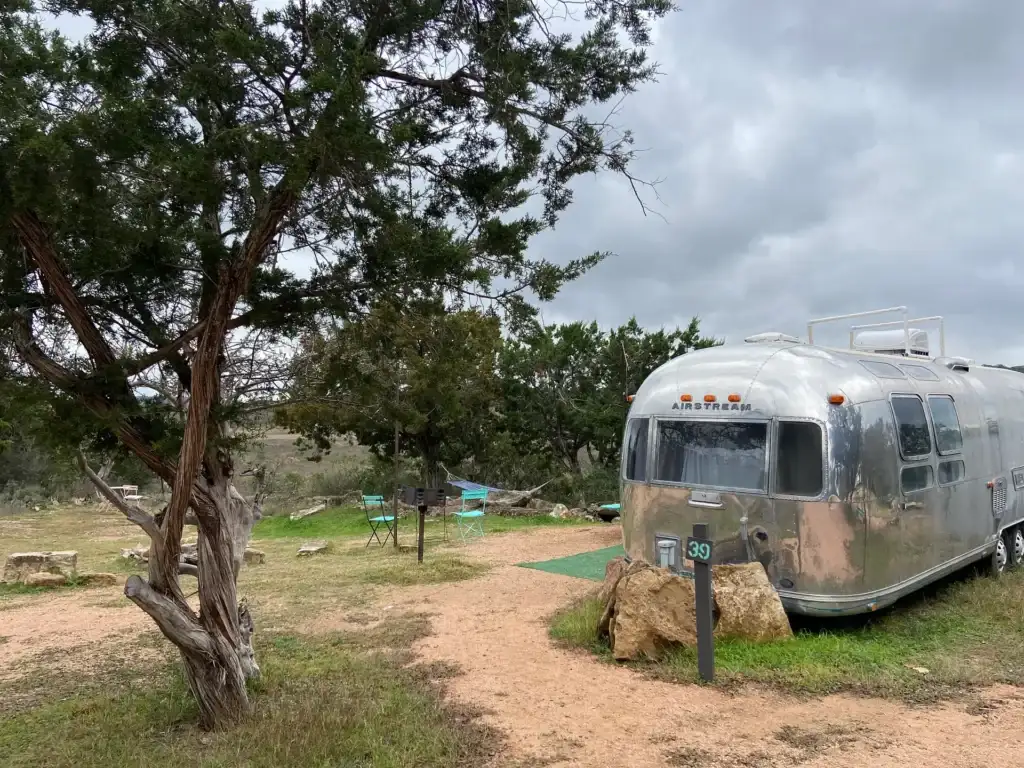
Market figures as of November 2026. They can be, for a buyer who wants to run a business and pays the right price. RV parks often earn more than apartments or storage because they’re more work and carry more risk. In the Hill Country, the best deals tend to have reliable water, a healthy septic system, high ground and books that match the bank deposits.
The hard part is that the same features that make a park attractive can also make it dangerous to own. A river view brings in weekend guests, and after the floods of 2025 and 2026, it also brings insurance bills and lender questions. So we’d start with the park’s location and its pipes, and get to the cap rate after that.
TL;DR
- Returns are higher because the work is higher. National 2026 figures put good parks near an 8% cap rate and older parks near 9%.
- Buying is often easier than building. New sites run about $30,000 to $40,000 each before land, and a new park takes seasons to fill.
- Check the land before the price. Water, septic, flood risk and county rules decide what a park can become.
- Expect to work. Plan on real management, marketing and repairs, or budget to pay someone to handle them.
Why people keep looking at RV parks
The demand has some real support. Long-stay guests include retirees, traveling workers and people between homes. Weekend guests head for the rivers, the wineries and the towns between San Antonio and Austin. And supply grows slowly, at about 1% a year nationally by one 2026 estimate, because good sites are hard to find and hard to permit.
Those are the reasons we first wrote about RV parks back in 2023. What’s changed since then is the math. Building got more expensive, and loan rates went up. Two deadly summers on the Guadalupe also changed how buyers, insurers and lenders look at anything near a river. We laid that out in our Hill Country RV park investor’s guide, and we’d read that one before you make an offer on a park near water.
Most of what follows is the first question a buyer has to answer: buy one that’s already running, or build your own?
Buy an existing park, or build one?
For most first-time owners, we’d look at an existing park first.
What you get when you buy. The pads, hookups, roads, septic and permits are in place, and the park has reviews, repeat guests and income you can check against tax returns. You can usually get a loan based on real numbers.
What you give up. The location is what it is. You’ll pay up front for the income the last owner built, and you inherit every problem underground. Older systems are where we’d spend the most time in due diligence. Rex and Leigh once helped a repeat client get $125,000 off an RV park with a septic problem, which shows why that inspection pays for itself. You may also find the park is “grandfathered” under older rules, and that expanding it could cost you that status.
What you get when you build. You choose the site, the layout, the amenities and the mix of guests. Everything’s new and up to current code. On the right land, you may also end up with a better park than any you could buy.
What you give up. Time, mostly. A new park has no reviews and no repeat guests. It’ll take several seasons to fill while the loan payments run from the start. The numbers have to work at a high cost per site, too, as we’ll get to below.
The land comes first
If you’re building, or if you’re buying a park you hope to expand, the land sets the limits on everything else.
Location. Guests need a reason to come. Good sites sit near where people already go, or along a road they’re already traveling. A nightly park near the river and a monthly park near I-35 jobs are different businesses, and the land should fit the one you’re planning.
Flood risk. Get a formal flood zone determination, then look beyond the map. Much of the 2026 damage in Kerr County came from creeks that feed the Guadalupe, so a park can sit well back from the river and still be in the path. Cheap land near a creek may be cheap for a reason.
Water. RV parks use a lot of it. Find out whether the water comes from a city, a utility or a well. If it’s a well, ask about the local groundwater district’s limits, and get any promise of more water in writing. In much of the Hill Country, water is what stops growth. Our Hill Country water guide has the bigger picture.
Soil and septic. Have the soil tested before you buy. Shallow rock can make a septic system much more expensive, and the system sets how many sites you can serve.
Rules and restrictions. This is the one that catches people by surprise. People tend to assume that rural land can be used however the owner likes. City rules, county requirements, old deed restrictions and subdivision covenants can limit RVs, length of stay, utilities or the number of units. Some can kill the idea. Read the deed and the plat, and call the county and any nearby city before you close.
What it costs to build
Costs vary widely, and much of the variation comes from what’s included. These are national 2026 estimates, so treat them as a starting point:
| Item | Estimated cost | Source |
|---|---|---|
| Good-quality park, per site, not counting land | $30,000 to $40,000 | MMCG Invest |
| Resort-style park, per site, including land and amenities | $40,000 to $70,000 | MMCG Invest |
| Electrical to each site | $3,000 to $7,000 per site | RoverPass |
| Engineered septic system | $75,000 to $200,000 or more | RoverPass |
| Stormwater and drainage work | $20,000 to $80,000 or more | RoverPass |
| Contingency | 10% to 15% of the budget | MMCG Invest |
In the Hill Country, water, septic and road work can push a project toward the high end.
We’d test any new build against revenue. MMCG reports that a $60,000-per-site resort needs about $12,000 a year in revenue per site to justify the cost, while operating parks actually bring in about $5,000 to $10,000. So on those numbers, a high-end build can fall short before anyone checks in.
If you’re going to build anyway, skipping hookups to save money may not help. A cheaper site usually earns a cheaper rate, and it can turn away the guests you most want.
What it takes to run
An RV park is a hospitality business on top of a real estate deal. Someone answers the phone, takes reservations, keeps the bathrooms clean, handles the guest whose power went out on Saturday night, and shows up when the water line breaks.
Plan for these before you buy:
- Management. Good on-site management makes a park, and poor management can sink one. If you won’t be there, budget for a full-time manager.
- Marketing. Guests have to find you. That means a working website, online booking, listing sites and attention to your reviews.
- Operating costs. MMCG reports about 50% to 55% of revenue for a professionally managed park, and near 70% for some nightly-heavy parks. A seller showing 35% to 40% has probably left out their own labor.
- Emergency planning. State law now requires flood evacuation plans for certain parks in floodplains.
- Taxes. Hotel tax rules differ for RV sites and cabins, and they can differ by city. Get a tax advisor’s read before you add cabins or glamping.
So what can it earn?
We wrote a separate piece on this: RV park rates of return, explained. It works through one park from cap rate to cash in the bank.
In brief, a nice, stable park at today’s prices and loan rates may start with a modest cash return, and the bigger returns usually come from buying a park that needs something you know how to fix. An old rule of thumb promised strong returns just for owning a park. We wouldn’t count on that. We would count on careful buying and good operating.
What we’d look for
If we were helping you buy a Hill Country park today, we’d want to see:
- High ground, or a clear flood record and a price that reflects the risk
- Reliable water, and written proof of any added supply you’re counting on
- A septic or sewer system that’s been inspected, with room for what you’re planning
- A mix of monthly and nightly guests, so one slow weekend can’t sink the month
- Books that match the bank deposits, with the owner’s labor counted
- Something you can improve, like empty sites, old rates, poor reviews or no online booking
If you’ve got a park in mind, or land you think could be one, talk to Rex. We’d be glad to walk through it with you.
Frequently asked questions
Are RV parks a good investment? They can be, at the right price and with the right operator. They often earn more than other property types because they take more work and carry more risk. Each park has to be judged on its own books and location.
How much does it cost to buy an RV park? Prices range widely with the size, location, income and condition. A park’s price is mostly a function of its income, so start with what it really earns. Our rates of return article shows how that works.
How much does it cost to build an RV park? National 2026 estimates run about $30,000 to $40,000 per site for a good park before land, and about $40,000 to $70,000 per site for resort-style parks with land and amenities. Septic, water and road work can add a lot in the Hill Country.
How many RV sites fit on an acre? It depends on the site size, the roads, the drainage, the septic field and local rules. Get a site plan from someone who’s designed parks, and confirm it with the county, before you count on a number.
Is it better to buy or build an RV park? For most first-time owners, we’d look at buying first. You get income you can verify and a loan based on real numbers. Building can work on the right land, but the cost per site and the time to fill it make the math harder.
Do I have to live at the park? No, but someone has to run it. Budget for a full-time manager if you won’t be there.
Glossary terms used
- Cap rate: A property’s yearly net operating income divided by its price.
- Net operating income: A property’s income after operating costs, before loan payments and income taxes.
- Grandfathered: Allowed to continue under older rules, often only until the use changes or expands.
- Floodway: The part of a floodplain where floodwater moves fastest, usually with the strictest building limits.
- Groundwater district: A local agency that can limit how much well water a property pumps.
- Due diligence: The checks a buyer does before closing a purchase.
- Glamping: Furnished tents, yurts or small cabins rented to guests.
Sources
MMCG Invest, “US RV Park and Campground Market Outlook 2026” and “Practical Guide for RV Park Planning, Development & Operations” (cap rates citing Newmark’s 2026 survey, cost per site, contingency, revenue per site, operating cost ratios). RoverPass, “RV Park Build Cost: 2026 Real Numbers” (electrical, septic, stormwater). Supply growth, flood events and state evacuation requirements as reported and sourced in Blue Collar Commercial Group’s Hill Country RV park investor’s guide (2026).
This article is general information, not investment, tax, legal or financial advice. Talk to your own advisors before you make a decision about a specific property.



