

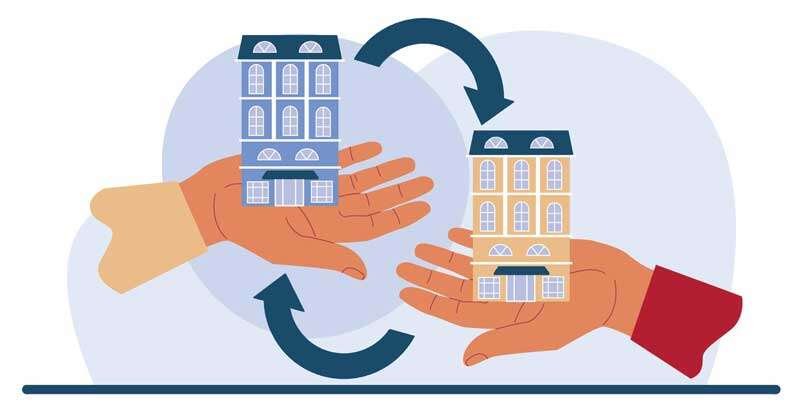
Updated October 2026. This guide explains how a 1031 exchange works for an owner of commercial property in Texas: what qualifies, who holds the money, the two deadlines, what can go wrong, and who should be on your team. It is for owners who are thinking about selling and want to know the rules before they talk to a CPA or attorney.
The quick answers
- What is a 1031 exchange? It is a way to sell investment or business real estate and buy other real estate without paying tax on the gain right away. The tax is put off, not erased.
- What can be exchanged? Since 2018, only real property held for business or investment.
- Can I take the sale money? No. A qualified intermediary holds it. If you receive it, the exchange can fail.
- What are the deadlines? You identify replacement property within 45 days of the sale and receive it within 180 days.
- Does Texas add a tax of its own? Texas does not tax personal income, so the question is mostly about federal tax. Confirm your own situation with your CPA.
- Who do I need? A CPA, a real estate attorney, a qualified intermediary, and someone to help find the replacement property.
What a 1031 exchange is
A 1031 exchange is a section of the federal tax code, Section 1031 of the Internal Revenue Code. It lets an owner swap one piece of business or investment real estate for another piece of real estate and report no taxable gain on the swap, as long as the rules are followed.
Deferral is the point. When you sell a building for more than your tax basis (roughly what you paid, adjusted for improvements and depreciation), you normally owe tax on the gain. In a qualifying exchange, that gain carries over into the new property. The tax comes due later, when you sell without exchanging again. The IRS asks you to report every exchange on Form 8824, even when no gain is taxed that year.
Most exchanges are “deferred” exchanges. You sell first, then buy. The two closings are not on the same day, so the law gives you a set time to identify and buy the new property, and it requires a neutral third party to handle the money.
What it means for you. An exchange changes when tax is due. It does not remove the tax. Ask your CPA what your basis is and what the deferred gain would be before you plan around this.
What qualifies
The property must be real property held for business or investment
The IRS states that for exchanges in 2018 and later, Section 1031 applies only to real property held for use in a trade or business or for investment. Before 2018, some personal property, such as equipment or vehicles, could be exchanged too. That is no longer the case.
Real property means land and what is built on it. Office buildings, retail centers, warehouses, apartment buildings, farm and ranch land held for investment, and vacant land held for investment can all fit, depending on how you hold and use them. The IRS says real property used for personal purposes, such as your home, is excluded. A 1031 exchange does not apply to a primary residence.
Like-kind is broad for real estate
“Like-kind” sounds narrow, but for real estate it is not. In general, one kind of business or investment real property can be swapped for another kind. A retail building can be exchanged for an industrial building. Raw land held for investment can be exchanged for an office building. The question is whether both properties are real property and both are held for business or investment, not whether they are the same type.
Your CPA or attorney should confirm that a particular property fits. How long you have held it, why you bought it and how you use it all matter. A property bought only to fix up and resell quickly can raise questions about whether it was held for investment.
The same taxpayer should be on both sides
The person or entity that sells the old property is generally the one who should buy the new one. If the old property is owned by an LLC or a partnership, the replacement is usually bought by that same entity. Changing how title is held in the middle of an exchange can cause problems, so raise it with your attorney early.
What it means for you. Start with two questions. Is the property business or investment real estate? Will the replacement be too? If either answer is no or unclear, stop and ask a CPA before listing anything.
The qualified intermediary and the money
In a deferred exchange, you do not take the sale proceeds. A qualified intermediary, often called a QI, is a neutral company that holds the money between the two closings. The IRS describes a qualified intermediary as a person who is not a disqualified person. Disqualified persons generally include certain related parties and anyone who acted as your employee, attorney, accountant, investment banker, broker or real estate agent in the two years before the sale, apart from exchange-related work and routine bank, title or escrow services.
The usual order looks like this:
- Before the sale closes, you sign an exchange agreement with the QI.
- At closing, the buyer’s money goes to the QI, not to you.
- Within the deadlines, you pick a replacement property and sign a contract to buy it.
- At the second closing, the QI sends the money to the seller of the new property.
The timing matters. The QI should be in place before the first closing. If the money lands in your account, even for a day, the exchange can be disqualified and the gain can become taxable. The same caution applies if you use the money for something else, such as paying a personal bill from the exchange funds.
The QI does not give tax advice. It follows the exchange agreement. Choosing one is worth some care. Ask how the funds are held, who can authorize a payment, what protections are in place if something goes wrong, and what the fees are. Your attorney can help with these questions.
What it means for you. Tell the buyer and the title company that you plan an exchange before you sign the sale contract. Line up the QI first. Our team can work with your attorney and QI on the real estate side.
The 45-day and 180-day deadlines
Two clocks start the day you transfer the property you are giving up.
- 45 days to identify. You must identify the replacement property in writing within 45 days. The IRS instructions for Form 8824 say replacement property must be identified within 45 days after the property being given up is transferred.
- 180 days to receive. You must receive the replacement property by the 180th day after the transfer. The Form 8824 instructions add that the deadline is the earlier of 180 days or the due date of your tax return for that year. That means a sale late in the year can leave you less than 180 days unless the return is extended. Your CPA should check this.
The two periods run at the same time. They do not run one after the other. If you identify a property on day 44, you still have until day 180, counted from the original transfer, to close.
These deadlines are strict. Ask your attorney whether weekends and holidays change anything in your case. If you miss one, the exchange generally fails, and the sale is treated as a regular sale with the gain taxable for the year.
What it means for you. Put both dates on a calendar the day the first sale closes. Start looking at replacement property before you list, not after you close. Forty-five days goes fast when you are still deciding what to buy.
The identification rules
You cannot just say “I will buy something.” The identification has to be specific, in writing, signed and delivered to the right person within the 45 days. The IRS publication gives limits on how many properties you can name.
The three-property rule
You may identify up to three properties, no matter what they are worth. You do not have to buy all three. You choose among them.
The 200 percent rule
You may identify more than three properties, as long as their combined fair market value at the end of the identification period is not more than double the total value of what you gave up. If you sell a building worth a given amount, the combined value of everything you name cannot be more than twice that amount.
The 95 percent exception
If you name too many properties, the exchange can still work if you receive replacement property worth at least 95 percent of the total value of everything you identified. This is a narrow back-up rule. Plan around the first two rules instead.
Most owners use the three-property rule because it is simple. Name your first choice, a second choice and a third. If the first deal falls apart in week six, you have not lost the exchange.
What it means for you. Treat the identification list as a real list of properties you would actually buy. Pick at least one back-up. Keep the paperwork your attorney and QI ask for, and send it the way the exchange agreement says.
Boot, debt and related parties
“Boot” is the word for anything you get in an exchange that is not like-kind real estate. Cash left over after you buy the new property is boot. Other non-like-kind property is boot too.
The IRS says that if, in addition to like-kind property, you receive other property or money, you must recognize gain up to the value of what you received. So a partial exchange can still be a good result, but part of the gain is taxed in that year.
A simple example. You sell a building and plan to buy another, but the QI has funds left over after the second closing. The extra money returned to you is boot, and your CPA will figure out how much of your gain is taxed.
Debt counts too
Debt plays a part in the math. The IRS says that if the other party takes over your liabilities, the amount is treated as money you received when figuring the gain you must recognize. In general terms, if you pay off a loan on the old property and take on less debt on the new one, the difference can create taxable gain unless you add cash of your own to make up for it. Ask your CPA to run the numbers before you pick a replacement and before you sign a loan commitment.
The new loan is a real-world piece of this. Lenders have their own rules on down payment, appraisals and timing, and those need to fit inside the 180 days. Our guide to commercial property loans in Texas covers what lenders ask for.
What it means for you. Ask your CPA to model the exchange with your real numbers: sale price, loan payoff, costs, and what you plan to buy. The cash and debt lines are where partial taxes tend to show up.
Related parties
Exchanges with a related person get extra scrutiny. Related persons generally include family members and entities you control, and the tax code and IRS publications set out who counts.
The IRS says that if either person disposes of the property within 2 years after the exchange, the exchange loses its tax-deferred treatment. The Form 8824 instructions describe the same two-year test and list a few exceptions. In plain terms, an exchange with a relative or an entity you own, followed by a quick sale, can undo the deferral.
What it means for you. If the buyer of your property or the seller of your replacement is a relative, a business partner or a company you have an interest in, tell your CPA before you sign anything.
Reverse and improvement exchanges
Two variations come up in commercial deals. Both are more complicated and more costly than a standard exchange, and both need an attorney who has done them before. Describe them to your CPA and ask whether they apply.
Reverse exchange
In a reverse exchange, you buy the replacement property before you sell the old one. A third party, usually set up by the QI, holds title to one of the properties until the exchange is complete. This can help when the right replacement property comes up before your own building sells. The details are technical, so do not attempt one without an attorney.
Improvement or build-to-suit exchange
An improvement exchange lets you use exchange funds to improve the replacement property, or to build on it, while a third party holds title. Timing and documentation are strict. Work not finished by the deadline generally does not count toward the replacement.
Both structures depend on the same deadlines, the same QI rules and a lot of paperwork. Our team can help with the property side of either one, including checking zoning, utilities and access on sites. Your CPA and attorney decide whether the structure fits your tax situation.
What it means for you. If you find the right building before your own is sold, talk to your attorney right away. Waiting can limit your options.
The Texas angle
Texas does not levy a personal income tax. For many Texas owners that means the main tax on a sale is federal, which is the tax an exchange can defer. Your own situation can differ, for example if you live in another state, hold the property through an entity, or buy or sell property outside Texas. Ask your CPA to check the tax in each state where you have property.
The Texas Comptroller administers state taxes, including the franchise tax, which applies to taxable business entities. Whether and how it affects a given sale is a question for your CPA.
Property tax is a separate topic from the income tax on a sale. It is based on appraised value, and a new property may be appraised differently from the one you sold. Look at the tax bill on a replacement property before you commit to it.
There is also a depreciation piece. When you sell a depreciated property, part of the gain can be taxed as depreciation recapture. Federal law changed in 2025, and our guide to the 2025 bonus depreciation law explains the depreciation rules and how recapture can come into play. Your CPA should confirm how recapture works with an exchange for you.
What it means for you. Ask your CPA two things. What would be taxed if I sold without exchanging? And what stays deferred if I do?
Finding replacement property in Texas
The 45-day clock is the hardest part for most owners, and finding a good property is why. The market is local. Properties in Comal County, Guadalupe County, Hays County and Kendall County differ in price, zoning, utilities and who rents them.
Owners often look at:
- Income property such as retail, office, industrial or small-bay buildings, where tenants and leases are part of the value.
- Land held for investment, where zoning, water, access and flood zone decide what it can be used for. Our checklist for evaluating land in Comal County lists what to check.
- A different kind of property than the one you sold. Real estate is broadly like-kind, so a land sale can lead to a rental building, or the other way around.
If you are selling land to a developer, read our guide for Texas landowners first, because the way you structure that sale affects whether an exchange is possible.
A property you have never seen is a poor choice just because the deadline is near. Check the lease, the condition, the zoning and the taxes, and make sure the numbers still work if the exchange fails and you owe the tax.
What it means for you. The tax deferral should not be the reason to buy. Only buy a property you would want to own if there were no tax benefit.
Common pitfalls
- Money, timing and related parties. The sections above on the qualified intermediary, the deadlines and related parties cover the mistakes that most often break an exchange.
- Naming too many properties, or vague ones. An identification outside the rules may not count at all.
- Forgetting boot. Cash back, or less debt than before, can create taxable gain.
- Changing the owner. Selling as one entity and buying as another can cause trouble.
- Holding the property for the wrong reason. A property bought to quickly resell may not count as held for investment.
- No plan for the end. Deferral pushes the tax into the future. Ask your CPA what the plan is when you eventually sell without exchanging.
What it means for you. Most of these are paperwork and timing problems, and they are avoidable with the right people involved from the first call.
Who should be on your team
- A CPA to work out your basis, the deferred gain, boot, depreciation recapture and how to report the exchange on Form 8824.
- A real estate attorney to review the sale and purchase contracts, the exchange agreement and the way title is held.
- A qualified intermediary to hold the funds and handle the exchange documents.
- A lender if you will finance the replacement. Tell them about the exchange and its dates at the first conversation.
- Our team to help you price the property you are selling, find and evaluate replacement property, and keep the real estate side on schedule. We do not give tax or legal advice. We work alongside your CPA and attorney.
Bring them together before the property is listed. Each one checks a different part of the deal, and the plan works better when everyone knows the dates.
What it means for you. Make the first call to your CPA, not to a listing agent. The tax answer should shape the real estate plan, and not the other way around.
Go deeper: the 1031 exchange series
These chapters from our learning series walk through each topic in more detail. They were first published in 2024, so use this guide for the current rules.
- Chapter 1: The Basics of 1031 Exchanges
- Chapter 2: Qualification Criteria for 1031 Exchanges
- Chapter 3: The Texas Real Estate Market Landscape
- Chapter 4: The Process of Executing a 1031 Exchange in Texas
- Chapter 5: Common Pitfalls and How to Avoid Them
- Chapter 6: Tax Implications and Considerations
- Chapter 7: Future Outlook and Legislative Considerations
Common questions
Does a 1031 exchange avoid tax for good?
No. It defers the gain. The deferred gain carries into the replacement property and is generally taxed when you sell without exchanging. Ask your CPA how it applies to you.
Can I exchange equipment or vehicles?
Not since 2018. Section 1031 now applies only to real property held for business or investment.
Do I need a qualified intermediary?
For a deferred exchange, yes in practice. You cannot receive the proceeds yourself without risking the exchange. Choose the QI before the first closing.
What if I cannot find a property in 45 days?
If you do not identify a replacement property in time, the exchange generally fails and the sale is treated as a regular one. This is why owners start looking early.
Can I buy a cheaper property?
You can, but the difference is generally boot and may be taxed. Debt that goes down can have a similar effect. Run the numbers with your CPA first.
The bottom line
A 1031 exchange can put off the tax on a sale of business or investment real estate. It has fixed rules: real property only, a qualified intermediary holding the money, 45 days to identify and 180 days to close, and careful handling of cash, debt and related parties.
Plan the sale and the replacement together, with your CPA and attorney involved from the start, so the dates and the numbers are settled before you list.
At Blue Collar Commercial Group, we help Texas property owners sell investment real estate and find replacement property that fits their plan and their deadlines. Contact our team to talk it through.
First published February 2024. Rewritten October 2026. The exchange rules come from IRS Publication 544 and the instructions for IRS Form 8824, read in October 2026. This article is general information. It is not investment, legal, tax or financial advice.



