
SoldRetail
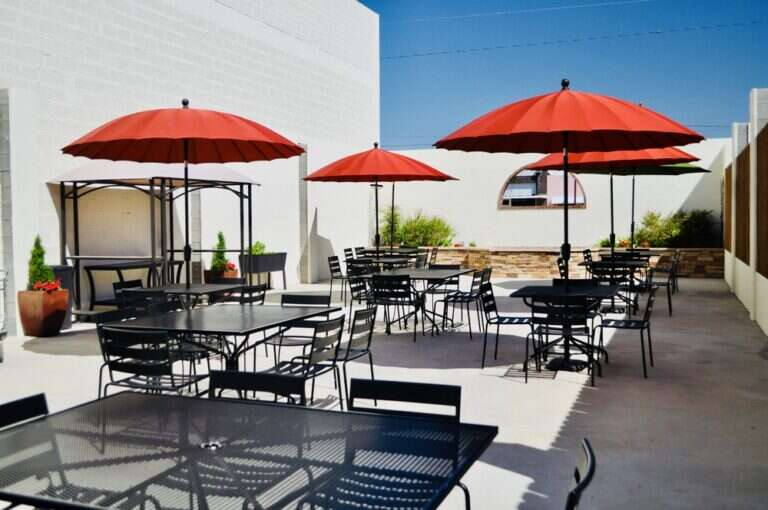
214 W. Sealy, Monahans
Asking price $750,000
Retail for Tenants in San Antonio & New Braunfels Metro
Talk to Rex about retailFinding the right retail space in New Braunfels, Boerne, or San Marcos means looking past fresh paint to evaluate curb cuts, customer drive times, and whether the lease terms protect your margins. We walk storefronts across Comal and Guadalupe counties, measure parking ratios against your peak business hours, and review pass-through operating expenses before you commit capital. Whether you are opening your first storefront, relocating an established brand, or right-sizing your current footprint, we inspect the physical space and negotiate the lease on your behalf. Tell us what your retail concept requires, and we will identify spaces built to support your daily sales.
The right retail space is the one that delivers paying customers to the counter at a sustainable occupancy cost — curb cuts, parking flow, and neighbor mix before postal address. For retailers evaluating strip centers, standalone pads, neighborhood shopping plazas, and downtown storefronts, signing a lease is a long-term commitment that directly dictates daily operations. Securing a location requires aligning customer drive patterns with storefront visibility while ensuring the underlying lease does not burden the business with unexpected building maintenance bills.
We help business owners look past cosmetic finishes to examine the operating details that make or break a storefront. That means confirming municipal water capacity, checking utility hookups, reading base-year operating cost language, and ensuring the parking lot allows convenient customer turnover during your busiest hours. Our advisory practice works to protect your bottom line by negotiating delivery conditions, tenant improvement allowances, and operating protections before you take possession of the premises.
Leasing dedicated retail space provides immediate consumer visibility, direct customer access, and the physical presence necessary to build long-term brand equity in a target trade area. Unlike back-office industrial parks or shared office suites, retail centers position your business directly in the daily traffic patterns of local residents and commuters. A well-placed storefront functions as an active sales tool, drawing walk-in trade and reinforcing credibility with customers who prefer interacting with products and staff in person.
Leasing commercial storefronts also introduces fixed overhead that must be supported regardless of weekly sales volume. Operating costs such as real estate taxes, property insurance, and common area maintenance fees adjust over time and require careful budgeting alongside base rent obligations. Selecting a retail property requires balancing this occupancy cost against realistic customer volume to ensure the location generates sustainable margins across every retail season.
Placing your business along major thoroughfares or within established shopping centers puts your brand in front of daily vehicular and pedestrian traffic. High-visibility storefronts generate continuous awareness without relying solely on paid digital advertising campaigns. Exterior signage rights and clear sightlines from adjacent roadways convert passing commuters into spontaneous walk-in customers. Securing prominent frontage gives your concept continuous market exposure that supports regular foot traffic.
Operating in a retail center allows your business to draw customers from adjacent anchor stores, grocery markets, and service providers. Neighboring businesses that serve similar consumer demographics help generate steady daytime and evening visitors throughout the week. Cross-shopping patterns reduce customer acquisition expenses by capitalizing on existing trip frequency within the center. Selecting a center with the right tenant mix brings qualified shoppers directly past your front door.
Retail properties feature dedicated customer parking fields, clear ingress and egress points, and accessible entryways designed for steady consumer turnover. Deceleration lanes and signalized intersections make entering and leaving the center straightforward for patrons during peak hours. Functional circulation preserves positive customer impressions before shoppers ever cross your threshold. Convenient physical access removes friction that might otherwise cause patrons to visit a competing business.
A brick-and-mortar storefront establishes tangible community roots and builds customer confidence in your merchandise or professional services. Shoppers continue to value tactile product interaction, immediate order fulfillment, and face-to-face customer care. The physical environment allows you to control your brand presentation and customer experience completely. Maintaining an accessible retail location deepens customer loyalty far more effectively than a digital-only channel.
Modern retail shells provide flexible interior configurations that can be customized to support point-of-sale counters, merchandise displays, or back-room storage. Landlords often provide financial contributions or rent concessions to offset specialized build-out expenses for qualified operators. Clear floor plans accommodate future layout changes as your product line or service workflow develops over time. Choosing an adaptable footprint ensures your physical shop continues to fit your operational workflow.
Finding and leasing retail property involves operational and contractual hurdles that can threaten a business if left unaddressed. Landlords frequently market gross rental rates that conceal heavy triple-net pass-through fees for property maintenance, insurance, and municipal taxes. Without a thorough review of past building expenses, a tenant can quickly discover that their actual monthly occupancy cost far exceeds their initial projections.
We address these challenges early by scrutinizing historical property expenses, inspecting physical utility infrastructure, and negotiating strict lease terms before signatures are exchanged. Our advisory approach ensures business owners are not caught off guard by unbudgeted build-out costs, deferred roof repairs, or restrictive center operating rules. We represent your operational interests at every stage so your retail venture launches on solid financial footing.
Triple net leases pass building operating costs, property insurance, and municipal tax assessments directly through to the tenant. Landlords who fail to cap controllable common area expenses expose retail tenants to sharp, unpredictable annual rent increases. Without audit rights and clear definitions of excluded capital expenditures, tenants end up paying for major structural replacements. Negotiating strict caps and clear operating expense definitions protects your operating margins over multi-year terms.
Leasing a space without clear exclusive-use protections leaves your business vulnerable to landlords leasing adjacent suites to direct competitors. Sharing parking and foot traffic with an identical concept fragments your customer base and damages revenue potential. Standard lease documents rarely offer exclusivity unless your representative specifically drafts and demands it during negotiations. Securing enforceable exclusive-use clauses ensures you control your product category within the shopping center.
Taking over a second-generation space or cold dark shell can reveal costly mechanical, electrical, and plumbing deficiencies. Inadequate grease trap capacity, insufficient electrical service, or non-compliant customer restrooms can exhaust your capital reserves before opening day. Relying on visual walkthroughs without reviewing utility capacity certificates often leads to expensive municipal permitting delays. Verifying mechanical specifications during site visits keeps your project timeline and budget intact.
A community retail center relies heavily on major anchor tenants, such as grocery stores or regional retailers, to pull consumers into the parking lot. If the primary anchor closes or relocates, foot traffic across the center can drop significantly while your base rent stays unchanged. Standard lease agreements do not automatically grant rent relief or termination rights when foot-traffic drivers depart. Establishing co-tenancy remedies protects your business if the center loses its primary drawing power.
Shopping center guidelines and municipal sign ordinances frequently restrict the size, illumination, and placement of exterior storefront signs. Subordinate tenants often find themselves excluded from prominent pylon or monument signage along the primary roadway. Inadequate street visibility directly suppresses walk-in customer volume and weakens business recognition across the surrounding community. Confirming signage allocations and sightlines before executing a lease preserves your visibility to passing traffic.
Evaluating commercial retail space requires looking beyond aesthetic appeal to analyze the physical and contractual components that determine long-term success. A storefront must accommodate your daily workflow, deliver adequate utility capacity, and provide straightforward access for customers and delivery couriers. Understanding how a space functions on an ordinary Tuesday morning and a bustling Saturday afternoon ensures the property can support your business requirements.
We guide business owners through detailed site inspections and lease reviews to uncover structural and legal terms that impact daily operations. We examine everything from grease trap interceptors and HVAC unit warranties to parking field circulation and pylon sign allotments. Focusing on physical fundamentals and lease language upfront prevents costly operational interruptions after you begin trading.
Observe how vehicles enter and exit the property during morning commute hours, midday lunch periods, and evening rush times. Properties situated on roads with high median dividers or awkward curb cuts can deter customers who prefer quick, convenient stops. Dedicated turn lanes and traffic signals significantly increase consumer willingness to turn into your shopping center. Accessible entry and exit points support repeat customer visits and reduce parking lot congestion.
Calculate the available parking spaces per unit of retail area and evaluate how existing tenants utilize the shared lot. Service businesses and fitness centers can monopolize parking stalls for extended periods, leaving fewer spaces for quick retail shoppers. Clear stall striping, safe lighting, and reasonable proximity from stalls to your front door directly influence customer comfort. Sufficient parking turnover ensures your patrons can always park without frustration.
Scrutinize whether the landlord is delivering a cold dark shell, a warm vanilla shell, or a second-generation retail space. The delivery specification dictates whether you or the landlord pays for the concrete floor slab, drywall finishing, drop ceilings, and basic lighting. Ambiguous delivery terms often shift thousands of dollars in mechanical build-out costs directly onto the tenant. Defining exact delivery standards in your lease letter of intent protects your upfront capital.
Check the age, service history, and operating capacity of the air conditioning units and mechanical systems serving the space. Landlords frequently draft leases requiring tenants to assume full replacement liability for aging rooftop units from their first day of occupancy. Negotiating maintenance contracts, parts warranties, or landlord replacement obligations prevents unexpected heating and cooling failures. Clear mechanical maintenance terms keep emergency repair bills from disrupting your cash reserves.
Inspect available facade fascia signage, under-canopy pedestrian blades, and panel positions on the roadside monument or pylon board. High-profile signage ensures commuters identify your storefront well before reaching the center curb cut. Review municipal sign codes and shopping center covenants to confirm your logo, lettering style, and illumination are fully permitted. Maximizing signage allocations directly reinforces your advertising and drives spontaneous customer stops.
Require a specific exclusive-use provision that prohibits the property owner from leasing space in the center to a directly competing business. The clause must clearly define your primary merchandise categories, core menu items, or specialized retail services to prevent close substitutes from opening next door. Without this protection, a landlord can populate an adjacent suite with a competitor selling identical products. Enforceable exclusivity insulates your trade area within the development.
Securing the right commercial retail space demands a structured search methodology, hard local data, and disciplined lease negotiation. Rather than driving through commercial corridors calling phone numbers on storefront banners, our advisory team coordinates an organized market search. We align your space requirements, consumer demographic targets, and operating budget with verified retail inventory across the region.
We walk alongside your team through every milestone, from defining mechanical and square-footage specifications to coordinating final walkthrough inspections. Our focus centers on uncovering hidden building costs, creating landlord competition for your tenancy, and securing favorable business terms in your lease contract. We remain your ongoing real estate advocate well after your grand opening celebration.
We begin by analyzing your business concept, target customer demographic, square footage targets, and mechanical build-out requirements. We evaluate your target rent budget against necessary plumbing, electrical power capacity, and required parking ratios. Establishing clear operational criteria early ensures we focus our property search exclusively on viable retail locations. Defining requirements upfront prevents wasted time on spaces that cannot support your business model.
Our team conducts a thorough search across listed properties, private commercial portfolios, and off-market spaces matching your criteria. We analyze vehicular traffic counts, trade-area customer patterns, and area retail co-tenancy across target submarkets like New Braunfels, Seguin, and Boerne. We compile an objective comparison showing rental rates, estimated triple net charges, and available tenant improvement funds. Reviewing comparative market data gives you complete visibility into genuine local leasing options.
We narrow the inventory down to the top candidate spaces and coordinate on-site property walkthroughs with your leadership team. During tours, we inspect curb cuts, measure sightlines from the roadway, review parking accessibility, and examine mechanical systems. We speak directly with adjacent shop operators when possible to gauge foot traffic consistency and landlord responsiveness. Touring candidates side by side clarifies which location offers the strongest commercial advantage.
We issue formal requests for proposals and letters of intent to multiple property owners to create competitive bidding for your tenancy. We aggressively negotiate base rental rates, free rent periods, tenant improvement allowances, and operating expense caps. Our team also negotiates vital legal protections including exclusive-use covenants, assignment rights, and co-tenancy remedies. Generating landlord competition secures the most favorable financial and operational terms possible.
We work closely with your legal counsel to review the landlord's standard commercial lease contract line by line. We verify that all negotiated business points, maintenance limits, delivery conditions, and audit provisions are accurately integrated into the document. We remove boilerplate language that shifts unreasonable building liabilities, structural repair costs, or unlimited pass-throughs onto your shoulders. Rigorous contract review protects your business from costly surprises throughout your tenancy.
We coordinate with the property owner and your general contractor to confirm the premises meet all agreed-upon delivery conditions before you accept possession. We verify that punch-list repairs are resolved and that landlord construction allowances are disbursed in accordance with lease terms. Our representation continues long after you open your doors, assisting with annual operating expense reconciliations or future expansion options. Having a continuous advocate ensures your retail tenancy runs smoothly for years to come.
Our retail tenant advisory practice serves a wide spectrum of commercial operators, from regional brands expanding their footprint to independent shop owners leasing commercial space for the very first time. We tailor our site selection and negotiation strategies to the distinct operational realities, capital constraints, and customer acquisition channels of each business category. Understanding how different concepts generate revenue ensures we match clients with properties that enhance their profitability.
Whether your business relies on high-turnover vehicular convenience, destination foot traffic, or specialized build-out infrastructure, we bring on-the-ground market intelligence to your side of the table. We evaluate utility hookups, zoning designations, and competitive spacing to find commercial spaces that serve your specific operational framework. Below are the primary retail tenant profiles we advise throughout Comal, Hays, and Guadalupe counties.
Independent business owners moving out of home-based operations or online marketplaces to open their very first brick-and-mortar shop. These operators need clear guidance on triple-net operating budgets, commercial utility requirements, and tenant improvement build-outs. We help them evaluate cash reserves, avoid overcommitting on square footage, and establish realistic timelines from lease signing to opening day. Guided representation protects first-time tenants from signing burdensome leases that strain working capital.
Restaurateurs, coffee roasters, and quick-serve concepts that require specialized infrastructure including commercial grease traps, vent hoods, and high-capacity electrical panels. These businesses need heavy utility connections, outdoor patio seating, and accessible customer parking to drive peak mealtime sales. We negotiate critical build-out timelines, landlord construction allowances, and exclusive food-category protections within the shopping development. Securing specialized infrastructure upfront prevents expensive mechanical retrofits later.
Dental clinics, physical therapy practices, salons, and wellness concepts that require heavy plumbing, private room build-outs, and patient-focused parking accessibility. These tenants require long-term lease stability, clear ADA accessibility, and sound insulation between commercial suites. We negotiate extensive tenant improvement packages and confirm that building zoning permits healthcare and personal service uses without municipal variances. Locating in retail centers provides these service providers with superior visibility compared to medical office parks.
Established retail brands and franchise operators executing strategic expansion plans across Central Texas growth corridors. These tenants require rigorous trade-area demographic analysis, traffic count validation, and strict site-selection criteria. We coordinate multi-market rollouts, evaluate cross-shopping synergies, and negotiate standardized lease terms across multiple properties. Partnering with local advisors allows multi-unit brands to secure premier retail locations ahead of competing concepts.
Established retailers seeking to optimize their commercial footprint by downsizing excess square footage or moving to higher-traffic shopping corridors. These businesses often require sublease coordination for their existing location while timing lease execution for a new, more efficient space. We assist in analyzing actual floor space utilization, negotiating flexible renewal or termination terms, and lowering total occupancy overhead. Strategic relocation restores operating efficiency and aligns store footprints with modern retail sales models.
Leasing commercial retail space involves navigating complex lease structures, mechanical due diligence, and financial commitments that directly affect your business operations. Business owners often have valid questions regarding tenant improvement funding, triple-net calculations, delivery conditions, and lease negotiation leverage. Understanding how landlords calculate rents and evaluate tenant credit helps you approach the leasing process with confidence.
We provide straightforward answers grounded in daily market transactions across New Braunfels and the surrounding Hill Country communities. Below are detailed responses to the questions commercial tenants ask most frequently when searching for and negotiating retail property leases. If your business has specific space or lease questions not covered here, our advisory team is ready to review your situation directly.
An endcap sits on the exterior end of a shopping center building, offering multiple sides of window exposure, potential drive-thru capabilities, and superior visibility from adjacent streets, while an inline space is situated between neighboring storefronts with visibility limited to its front facade. Endcap locations command higher rental rates because they capture heavier vehicular attention and offer flexible access, making them prime choices for food and beverage concepts. Inline spaces carry lower base rental rates and reduced utility cooling costs, making them cost-effective options for service businesses and destination retail shops that rely on appointment traffic or intentional visits rather than roadside impulse stops.
A triple net lease requires the tenant to pay base rent plus their proportionate share of the property’s real estate taxes, building property insurance, and common area maintenance fees. These pass-through operating expenses are billed monthly on an estimated basis and reconciled annually based on actual building expenditures. Because these operational costs adjust each year, your monthly housing payment can fluctuate if municipal property valuations increase or insurance rates change. We negotiate controllable cost caps and audit rights to ensure you are not overbilled for landlord overhead expenses.
A tenant improvement allowance is a financial contribution agreed to in the lease that the landlord provides to help fund the architectural, mechanical, and interior construction needed to adapt the space for your business. Landlords disburse these funds as scheduled reimbursements upon receiving contractor invoices, paid receipts, and statutory lien waivers after work is inspected. The total allowance amount depends on your lease term length, tenant credit strength, and whether the space is a cold dark shell or a second-generation storefront. We ensure the lease clearly outlines disbursement schedules so you are not forced to carry construction debt indefinitely.
An exclusive-use clause is a contractual lease agreement in which the landlord covenants not to lease any other suite in the retail center to a business selling competing products or services. For example, a pizza restaurant or a boutique fitness studio can secure exclusivity preventing direct rivals from opening storefronts a few doors down. Without an enforceable exclusive-use provision, a property owner has no legal obligation to protect your sales territory inside the development. We draft comprehensive exclusive-use language that includes rent abatement or lease cancellation remedies if the landlord breaches the term.
A co-tenancy clause links your lease obligations to the operational presence of a major anchor tenant or a minimum occupancy threshold across the retail center. If the primary grocery store closes or the center falls below a specified occupancy level for an extended period, a co-tenancy provision allows you to pay reduced rent or terminate your lease early. This protection prevents small retailers from being trapped in a struggling, vacant shopping center after customer foot traffic drops sharply. Establishing realistic co-tenancy triggers protects your business from circumstances outside your direct operational control.
Delivery condition defines the exact physical and mechanical state in which the landlord must hand over the premises to your construction team before rent payments commence. A cold dark shell usually lacks lighting, finished flooring, interior drywall, heating and cooling equipment, and plumbing fixtures, requiring substantial upfront capital investment. A warm vanilla shell typically provides finished drywall, basic electrical outlets, concrete subfloors, ceiling tiles, and working restrooms ready for tenant fixtures. Clarifying whether the space comes with adequate electrical amperage and grease interceptor capacity prevents major construction surprises.
Percentage rent is a lease arrangement where a retail tenant pays base monthly rent plus an additional percentage of gross sales revenue once sales surpass an agreed financial threshold known as the breakpoint. Breakpoints can be natural, calculated by dividing annual base rent by the agreed percentage, or artificial, set through direct negotiations between landlord and tenant. Retailers must carefully define what constitutes gross sales, explicitly excluding sales taxes, customer refunds, employee discounts, and online order pickups fulfilled off-site. We help clients evaluate whether a percentage rent structure fits their sales margins or if a fixed base rent is more advantageous.
Most standard commercial leases prohibit assigning the lease or subleasing the premises without the landlord’s prior written consent, but that right can be negotiated to prevent unreasonable landlord withholding. Negotiating favorable assignment and subletting language allows you to transfer the space if you sell your business or need to downsize your footprint before the lease term expires. Landlords typically require the incoming subtenant to demonstrate comparable creditworthiness and maintain a retail use compatible with center co-tenancy rules. Your CPA or qualified tax advisor can evaluate how lease exit costs, unamortized improvements, or sublease income affect your specific accounting position.
Each sale shows the asking price, and the closing date when we have it.
Asking price $750,000
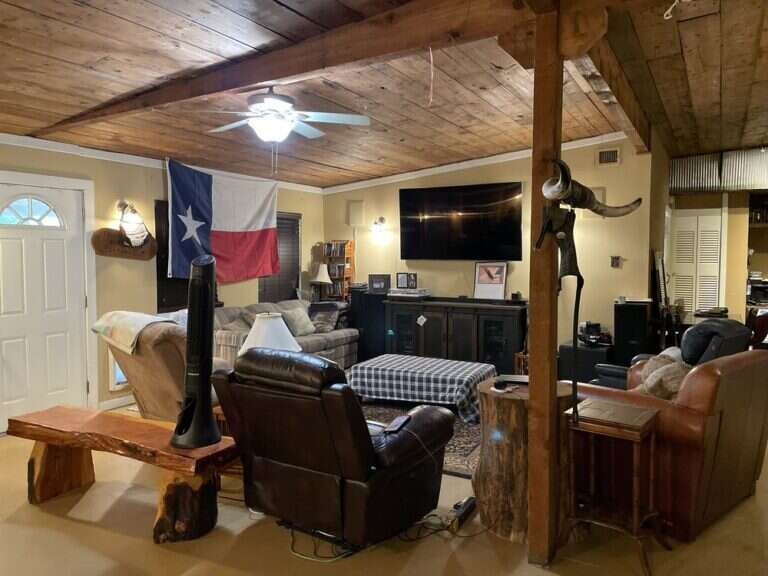
Asking price $875,000 · Closed July 2023
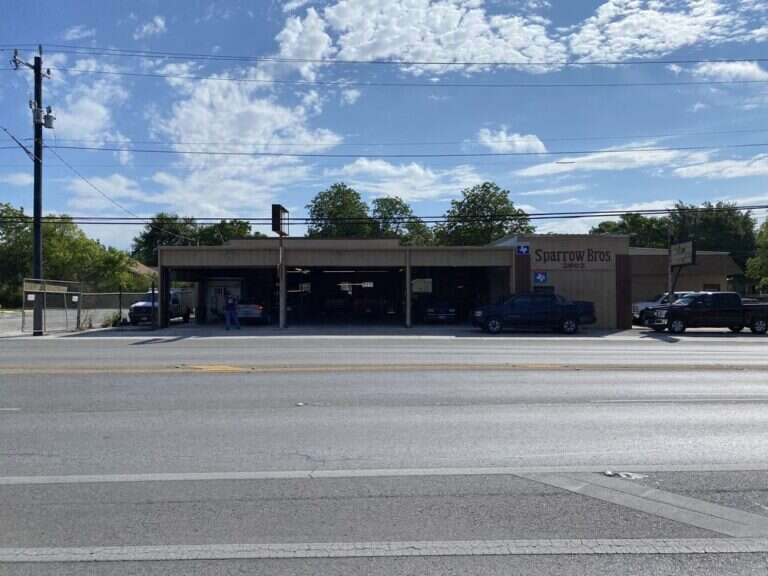
Asking price $449,000
The market reports for this kind of property.
We also work these.
What is changing in Texas land, water and growth, explained for owners, not insiders.

TxDOT taking part of your Texas land? See what the state pays for, which losses it doesn't count, how the process runs, and when…
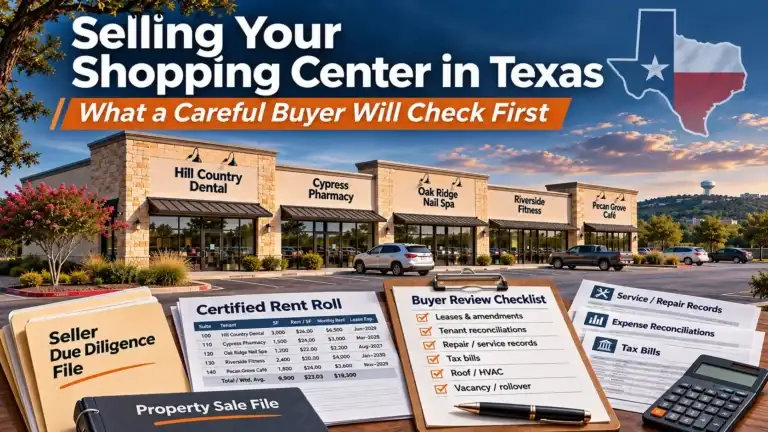
Selling a Texas shopping center? See how a careful buyer rebuilds your income, which fixes can pay off, and how to handle tenant estoppels…
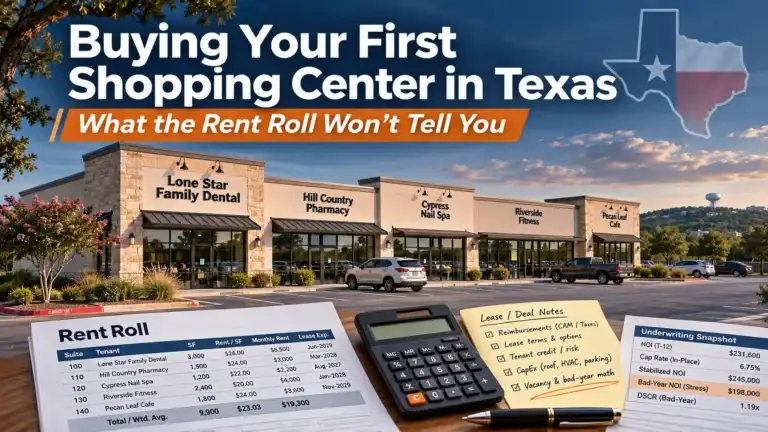
Buying your first Texas shopping center? See how vacancy, taxes and loan terms can turn a 7.5% return into 5%, and what to check…

A 15-minute call. Tell him what you own or what you want to buy. He will tell you what he sees, good and bad. No cost, no pressure.
Talk to Rexor call 210-823-3721
We Are Ready To Help You In Making Smart Real Estate Decisions
Whether you have questions about commercial real estate, need advice on your next investment, or are ready to take the next step, we’re here to help. At Blue Collar Commercial Group of New Braunfels, we pride ourselves on providing personalized, expert guidance at every step. Fill out the contact form, and we’ll get back to you promptly to discuss how we can work together to achieve your goals. Let’s start the conversation today!
Local commercial real estate news and new listings, once a month.