
SoldLand
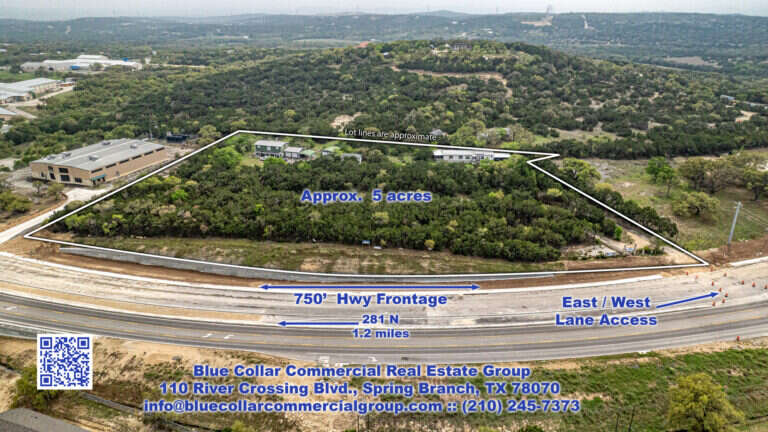
21393 TX-46, Bulverde
Asking price $1,595,000 · Closed June 2026
Land in San Antonio & New Braunfels Metro
Talk to Rex about landWhether you are acquiring a commercial corner in New Braunfels, marketing family ranch acreage in Boerne, or structuring a ground lease along Highway 46 in Seguin, raw ground requires an evaluation that goes far beyond a parcel map. Our team walks the fencelines, pulls the utility service maps, and verifies water capacity with local providers before you commit capital. We know how terrain, drainage easements, and municipal boundaries dictate usable acreage across the corridor. Tell us what you plan to accomplish, and we will give you a straight assessment of what the dirt can realistically support.
Land is unimproved or partially improved real estate evaluated by its entitlements, access, topography, and utility infrastructure rather than existing structural improvements. Unlike improved commercial assets where cash flow flows immediately from tenant leases, land value is established by what can legally, physically, and economically be built upon the site. Valuation hinges on municipal jurisdictional authority, zoning districts or absence of zoning in unincorporated county areas, availability of potable water service, and capacity for wastewater treatment. Physical factors such as rock depth, floodplain coverage, natural slope, and frontage along primary arterial roadways establish how much of the gross acreage can actually be developed.
Transactions in the land sector involve a wide spectrum of market participants, including agricultural operators, long-term legacy owners, commercial development sponsors, utility providers, and public agencies. Contract structures frequently feature extended feasibility periods to allow for environmental studies, boundary surveys, geotechnical soil borings, and municipal utility district negotiations. Holding costs include annual county property taxes, insurance, boundary maintenance, and financing carry, which persist regardless of market transaction volume. Because unimproved tracts generate minimal operational income without an agricultural, grazing, or commercial lease, capital structures prioritize entitlement milestones and utility delivery schedules.
Tracts of ground vary dramatically based on location, existing infrastructure, and legal development rights. A commercial hard corner along an interstate corridor functions under entirely different economic principles and engineering requirements than a working cattle operation or an unplatted residential development parcel. Categorizing land correctly clarifies highest and best use, identifies the relevant buyer pool, and establishes realistic timelines for municipal approvals and utility connections.
In our experience evaluating tracts across Comal County and neighboring counties, misclassifying a property leads to inaccurate pricing and wasted marketing time. Surface water availability, groundwater conservation district rules, and road frontage dictate actual project feasibility far more than general acreage figures. Reviewing the canonical categories below helps owners and buyers focus on the specific physical and legal attributes that determine land value.
Commercial land encompasses pad sites, hard corners, and development tracts zoned or situated for retail, office, healthcare, or hospitality uses. These parcels prioritize high daily traffic counts, curb cuts, signalized intersection access, and immediate connection to municipal water and sewer mains. Off-site improvements, regional detention requirements, and roadway dedication covenants often dictate site layout. Securing commercial tracts with verified utility capacity ensures a project moves directly into architectural planning without multi-year infrastructure delays.
Residential land consists of acreage designated for master-planned communities, single-family subdivisions, townhome tracts, or suburban multi-family campuses. Evaluation centers on school district lines, available municipal utility district support, off-site sewer extensions, and road connectivity. Terrain dictates lot yield, as steep elevation changes and rock outcroppings increase grading costs and drainage reserve requirements. Determining usable density early keeps land acquisition costs aligned with realistic finished-lot economics.
Industrial land comprises acreage suited for warehousing, logistics yards, outdoor equipment storage, light manufacturing, and freight operations. Critical site criteria include proximity to major freight corridors, wide turning radii for commercial trucks, heavy three-phase electrical power, and municipal or industrial water service. Topography must offer level building pads to minimize cut-and-fill grading expenses for large-footprint structures. Verifying heavy haul road designations and industrial zoning protects buyers from costly permitting road blocks.
Ranch and recreational tracts are large-acreage properties utilized for livestock production, equestrian facilities, personal recreation, wildlife management, and family retreats. Value drivers include live surface water, perimeter game fencing, native tree cover, privacy buffers, and topography offering scenic Hill Country views. These properties often operate under agricultural or wildlife tax valuations that dramatically reduce annual property tax liabilities. Confirming water well production and access easement terms protects the private enjoyment and operating budget of the acreage.
Agricultural and farm land includes productive acreage dedicated to cultivated crop production, hay operations, pasture, and agribusiness facilities. Soil composition, drainage characteristics, irrigation water rights, and existing agricultural lease arrangements establish the operational baseline. Maintaining active agricultural property tax valuation requires strict adherence to county appraisal district minimum acreage and intensity standards. Reviewing current lease terms and soil fertility records ensures continued operational yields and property tax protection.
This category covers specialized acreage parcels including conservation easements, institutional campuses, utility substations, communication tower sites, and mineral extraction properties. Each tract operates under distinct legal covenants, deed restrictions, or environmental remediation guidelines that limit surface development while offering alternative utility or revenue models. Due diligence often requires extensive title examination, review of severed mineral estates, and coordination with state environmental agencies. Understanding these specific legal overlays prevents unexpected restrictions on future land use.
Acreage and commercial dirt attract participants with vastly different capital horizons, operational requirements, and risk tolerances. Long-standing family owners holding generational acreage face different decisions than private developers seeking shovel-ready retail pad sites or corporate site selectors expanding an industrial logistics footprint. Serving this asset class requires aligning property characteristics with the exact operational and financial objectives of each party.
Our team works across the table with buyers, sellers, landlords, and tenants who value direct data over sales rhetoric. We evaluate physical soil, regional water infrastructure, and county road access so our clients can make calculated decisions. The profiles below represent the primary groups we advise across the regional market.
Families and legacy owners holding acreage often reach a stage where estate settlement, property management demands, or highway expansion prompt a disposition. We analyze historical agricultural tax status, unsevered mineral rights, and access points to present a clear picture of true market value. Our team markets acreage without disrupting ongoing ranch operations, ensuring properties transfer under clean terms. This approach allows legacy owners to harvest their equity without leaving value on the table.
Regional builders and commercial development sponsors require sites with defined utility capacity, predictable zoning paths, and manageable site prep costs. We dig into certificate of convenience and necessity boundaries, review municipal utility district plans, and evaluate thoroughfare expansion maps. By verifying water and sewer availability before contract execution, we eliminate unexpected infrastructure capital calls. This due diligence ensures projects maintain their horizontal construction timelines.
Investors selling improved commercial real estate or developed properties frequently deploy sale proceeds into raw or semi-improved acreage to defer capital gains tax liabilities. Because statutory exchange deadlines govern the transaction schedule, identifying viable tracts with clean title and straightforward closing paths is paramount. We match exchange buyers with parcels that fit their long-term hold strategy while coordinating documentation with their qualified intermediary. This discipline protects capital while securing quality ground.
Trade contractors, equipment dealers, and building material suppliers need industrial acreage for fleet parking, dispatch yards, and heavy outdoor storage. These businesses require level sites with stabilized base ground, heavy perimeter security fencing, and commercial driveway access off state highways. We identify parcels outside restrictive city zoning ordinances that still offer reliable electrical service and fiber connectivity. Securing the right yard provides operational stability without the overhead of unneeded warehouse square footage.
Property owners seeking passive recurring revenue without construction risk frequently ground lease commercial frontage to retail operators, fuel plazas, or quick-service restaurant groups. The tenant funds and constructs the building while the landlord retains fee simple ownership of the underlying dirt under a long-term lease. We negotiate lease terms that address property tax escalation, construction commencement timing, and reversion rights when the term concludes. This structure delivers predictable income while preserving generational real estate ownership.
Private buyers making their initial commercial land acquisition need clear guidance on carry costs, property tax exemptions, and utility availability. We explain how rolling off an agricultural tax valuation triggers multi-year tax rollback penalties and why an unplatted parcel cannot secure immediate building permits. Our team verifies title exceptions, road maintenance agreements, and survey boundary markers before earnest money turns non-refundable. This practical guidance protects first-time buyers from costly post-closing surprises.
Buying, selling, or leasing acreage involves legal, financial, and civil engineering considerations that do not exist with improved commercial buildings. Questions around water access, utility service boundaries, agricultural tax exemptions, and county regulations emerge on virtually every transaction. Straightforward answers based on local market facts prevent costly assumptions before contracts are executed.
We believe in addressing land mechanics plainly, from certificate of convenience and necessity service lines to deed restrictions and rollback taxes. Below are direct answers to the foundational questions clients ask when evaluating commercial, industrial, or rural land across the region.
Raw land requires you to evaluate development feasibility, utility capacity, and municipal entitlements from the ground up, whereas improved commercial property transfers an existing building with operational income and in-place utilities. Land carries lower insurance and maintenance expenses during ownership, but it produces minimal cash flow to offset debt service and property taxes. Lenders typically require larger down payments for land purchases than for cash-flowing buildings because unimproved property represents a development execution risk. The return on land comes through strategic rezoning, utility delivery, or selling to an end user at an appreciated basis.
An agricultural valuation is a special property tax appraisal based on the land’s agricultural productivity value rather than its open-market development value, resulting in substantial annual tax savings for the owner. When the use of the property changes from agricultural production to a non-agricultural commercial or residential use, county appraisal districts assess rollback taxes. These rollback taxes recapture the difference between what was paid under the agricultural valuation and what would have been paid under full market value for the prior several tax years, plus statutory interest. A qualified tax advisor can evaluate how this applies to your situation before you alter property usage or execute a purchase contract.
A Certificate of Convenience and Necessity establishes the exclusive legal right and obligation of a specific retail water or sewer utility provider to deliver service within a defined geographic territory. In unincorporated county areas, the fact that a utility pipe runs along the road frontage does not mean the provider is legally permitted or obligated to connect your parcel. If a tract sits outside an active water or sewer CCN, obtaining service requires petitioning for decertification, negotiating dual certification, or funding costly utility extensions across third-party properties. Confirming the CCN status during your feasibility study protects you from purchasing ground that cannot legally secure potable water.
Groundwater conservation districts regulate the spacing, permitting, and pumping volume of water wells drilled into regional aquifers to manage long-term water supplies. While small domestic and livestock wells frequently qualify for exemptions, commercial developments, high-density residential subdivisions, and industrial facilities must obtain operating permits that cap annual water production based on acreage size. In areas with constrained aquifer levels, these pumping caps can limit the overall density or operational scale of a planned commercial facility. Verifying district rules and historical well production logs confirms whether your intended land use will have adequate water supply.
Commercial land held for business use or investment qualifies as like-kind property under Internal Revenue Code Section 1031, allowing an investor to defer capital gains taxes when swapping into or out of other real property. You can exchange an improved property, such as an industrial warehouse or retail strip center, directly into raw land, or sell land to purchase an income-producing asset. Strict statutory deadlines govern the identification and acquisition windows following your initial sale closing, and funds must be held by a qualified intermediary. Your CPA can confirm the specifics for your position before entering an exchange agreement.
Physical land due diligence should include a current boundary and topographic survey showing all easements, a Phase I Environmental Site Assessment to surface past contamination liabilities, and geotechnical soil borings to confirm foundation stability and rock depth. You also need a drainage and floodplain analysis to identify non-buildable acreage, alongside verification of legal roadway access and driveway sight distances from the relevant highway authority. Walking the entire perimeter confirms the physical location of fences, drainage channels, and potential unrecorded utility lines. Resolving these items during the feasibility period prevents unexpected site development capital expenses.
In Texas, counties do not possess general zoning authority, meaning they cannot dictate specific commercial land uses or restrict business types outside incorporated city limits. However, counties strictly regulate subdivision platting, roadway construction standards, storm drainage, and on-site sewage facility permitting for septic systems. If a tract sits within a municipality’s extraterritorial jurisdiction, the city can enforce its subdivision platting codes, signage rules, and environmental tree ordinances even though it cannot enforce land-use zoning. Determining whether a parcel falls under county oversight, municipal zoning, or extraterritorial jurisdiction dictates your approval timeline and engineering costs.
A commercial ground lease is an agreement where a tenant leases the bare dirt for a multi-decade term and finances, constructs, and owns the building improvements on top of the site. The landlord retains fee simple ownership of the land, collects net rental income without operational property maintenance obligations, and receives ownership of the improvements when the lease term concludes. Ground leases make strategic sense for legacy landowners who want steady, long-term cash flow without selling their family ground, as well as for national retail tenants seeking premier arterial locations where owners refuse an outright fee simple sale.
Each sale shows the asking price, and the closing date when we have it.
Asking price $1,595,000 · Closed June 2026
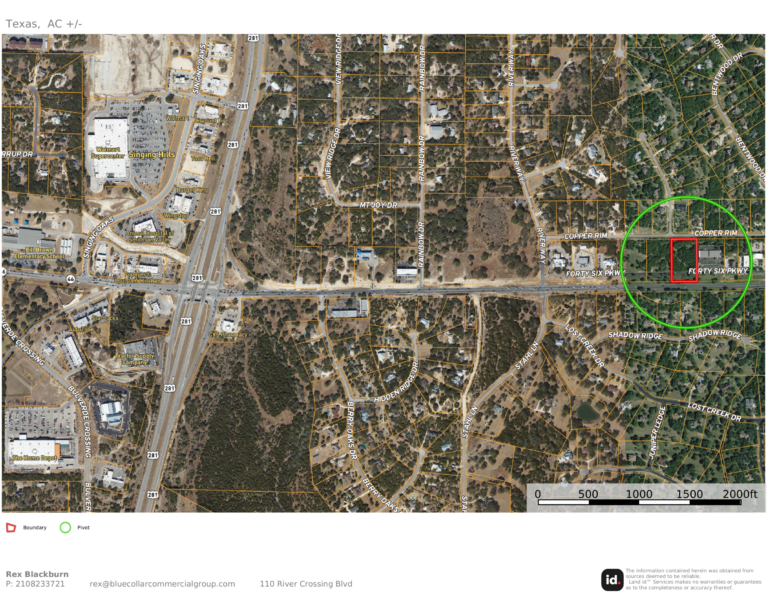
Asking price $595,000 · Closed April 2024
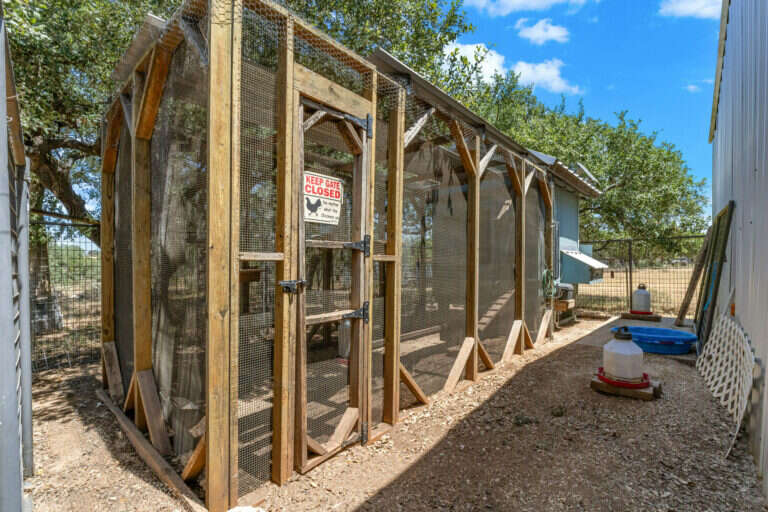
Asking price $1,095,000 · Closed April 2026
We also work these.
What is changing in Texas land, water and growth, explained for owners, not insiders.

TxDOT taking part of your Texas land? See what the state pays for, which losses it doesn't count, how the process runs, and when…

Selling a Texas shopping center? See how a careful buyer rebuilds your income, which fixes can pay off, and how to handle tenant estoppels…

Buying your first Texas shopping center? See how vacancy, taxes and loan terms can turn a 7.5% return into 5%, and what to check…

A 15-minute call. Tell him what you own or what you want to buy. He will tell you what he sees, good and bad. No cost, no pressure.
Talk to Rexor call 210-823-3721
We Are Ready To Help You In Making Smart Real Estate Decisions
Whether you have questions about commercial real estate, need advice on your next investment, or are ready to take the next step, we’re here to help. At Blue Collar Commercial Group of New Braunfels, we pride ourselves on providing personalized, expert guidance at every step. Fill out the contact form, and we’ll get back to you promptly to discuss how we can work together to achieve your goals. Let’s start the conversation today!
Local commercial real estate news and new listings, once a month.