
SoldIndustrial
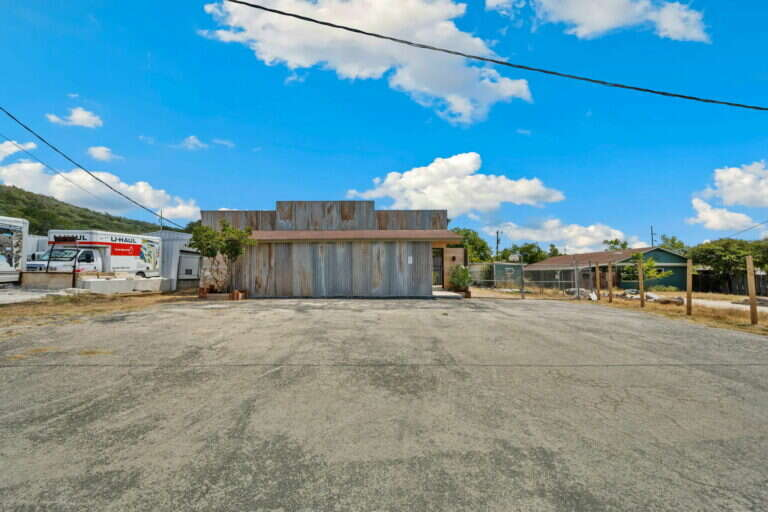
186 Julius Dr, Canyon Lake
Asking price $369,000 · Closed March 2025
Industrial for Landlords in San Antonio & New Braunfels Metro
Talk to Rex about industrialFilling industrial vacancy across New Braunfels, Schertz, and San Marcos takes more than hanging a sign along the highway. We walk your slab, check your three-phase power service with the local utility provider, and confirm your truck apron radius before quoting rental rates. Whether you need to backfill a vacant distribution dock, carve multi-tenant suites out of a clear-span building, or renew an anchor tenant on adjusted terms, we match your building’s physical envelope with tenants whose operational wear fits your long-term goals. Send us your building survey and utility bills, and we will show you what the market will bear.
Industrial vacancies tend to fill on positioning and tenant quality more than on waiting, and the cost of the wrong tenant outlasts the vacancy. Across Comal County and Guadalupe County, warehouse and distribution facilities, light manufacturing buildings, flex industrial spaces, and secure contractor yards compete for creditworthy operations that need physical utility above all else. Success as a property owner means aligning your building’s ceiling height, grade-level doors, and heavy power capacity with an occupant whose daily wear will not destroy your capital value.
We evaluate your property from the tenant’s driver seat, measuring gate clearances, dock levelers, and yard drainage against local zoning requirements. Signing a high-impact manufacturing user may deliver headline rent today, but specialized improvements that cannot be reused create deep re-leasing risk when that tenant departs. Blue Collar Commercial Group helps owners structure leases that protect building infrastructure, require appropriate restoration provisions, and preserve income stability over multiple market cycles.
Managing an industrial asset requires constant calibration between base rental rates, tenant improvement allowances, and the physical degradation that heavy machinery and freight traffic cause. A general commercial listing approach often attracts businesses whose electrical loads or truck movements exceed your property’s permits, creating municipal headaches and costly downtime. Dedicated landlord representation establishes an underwriting filter that screens every prospective operation before they receive a lease draft.
A well-represented property also commands structured escalations and fair recovery of operating costs, shifting inflation risk away from the owner’s bottom line. However, demanding terms that ignore submarket vacancy or deferring essential maintenance on roofs and dock seals will stall leasing velocity and leave spaces sitting empty for months. We balance aggressive market pricing with realistic tenant incentives to maintain steady occupancy.
Industrial machinery, forklift traffic, and chemical handling can degrade concrete slabs and structural columns rapidly. We review prospective tenant workflows against your building's design limits before issuing terms. This diligence keeps heavy industrial uses out of buildings built for light assembly.
Pouring capital into specialized tenant improvements for a single user creates severe vacancy exposure down the road. We advise owners to fund universal enhancements like upgraded LED lighting, clean office build-outs, and standardized dock levelers. Focusing dollars on general-utility improvements ensures your capital benefits future leasing cycles.
Industrial operating costs shift unpredictably when county tax assessments and property insurance adjust. We structure triple net leases that capture property taxes, building insurance, and common maintenance directly from the tenant. This lease mechanism insulates your net operating income from municipal and carrier expense changes.
A signed lease is only as dependable as the balance sheet behind it. We scrutinize corporate financial statements, operating histories, and parent entities to determine credit strength. Requiring a parent-company guaranty or higher security deposits protects ownership against sudden operational default.
Allowing leases to drift into short-term extensions robs ownership of capital planning certainty. We initiate renewal discussions well ahead of expiration to gauge tenant intent and test market replacement rates. Staging these negotiations early protects your occupancy pipeline and prevents costly multi-month dark periods.
The best industrial tenants rarely browse generic listing boards when expanding along the I-35 and Highway 46 corridors. We market directly to regional supply chain vendors, construction contractors, and distribution users looking for space. That direct local outreach places your vacancy in front of qualified corporate decision-makers.
Industrial landlords face operational challenges that retail and traditional office owners never encounter. Heavy tractor-trailer access wears down caliche and asphalt paving, unpermitted exterior storage can trigger county code enforcement, and specialized tenant alterations can leave a space unrentable to standard logistics users. Overcoming these hurdles requires strict lease covenants paired with ongoing property oversight.
We inspect deferred capital items before taking a property to market, identifying roof leaks, broken dock seals, and cracked slabs that cause prospective tenants to walk away during tours. Addressing small physical defects before listing prevents prospects from demanding oversized rent discounts or walking from negotiations. Our process resolves operational friction before marketing begins.
Continuous heavy axle loads quickly deteriorate subgrades, concrete aprons, and internal warehouse slabs. We establish truck weight thresholds and vehicle staging boundaries within the lease document. Defining these operational limits prevents premature pavement failure and costly site repaving.
Many tenants require heavy three-phase power that exceeds existing transformer limits or panel configurations. We verify utility capacities directly with local service providers before entertaining proposals from high-draw users. This prevents landlords from making unachievable electrical commitments in letters of intent.
Tenants often expand material storage into unstabilized yard areas, sparking county drainage and environmental disputes. We define permitted exterior yard uses, screening requirements, and impervious cover boundaries in plain language. Tight site control keeps your property aligned with Comal County and municipal development codes.
Manufacturing users often install clean rooms, overhead cranes, or custom piping that standard users cannot operate. We require specific restoration clauses paired with removal escrows in the lease terms. Ensuring the tenant funds equipment decommissioning prevents owners from inheriting expensive demolition projects.
A single specialized vacancy can sit empty for many months if pricing is misaligned with functional utility. We monitor local square footage demand and adjust marketing focus across light manufacturing, assembly, and service trades. Broadening your tenant target base compresses downtime between lease expirations.
Industrial operations frequently handle petroleum products, solvents, and bulk chemicals that carry environmental risk. We require comprehensive baseline inspections, hazardous material disclosures, and strict indemnification clauses. Documenting baseline environmental conditions protects ownership from legacy contamination claims.
Securing a high-performing industrial lease requires evaluating the physical asset and the prospective occupant side by side. An owner must assess whether a building’s functional dimensions match the tenant’s daily throughput, while verifying that the tenant’s financial foundation can survive seasonal shifts. Skipping this dual evaluation invites lease disputes and property degradation.
We review the tenant’s operational flow from delivery gate to loading bay, identifying potential bottlenecks before signing commitments. Concurrently, we confirm that ownership has enough cash in reserve after covering debt obligations and property taxes so that capital improvements remain fully funded. Balancing physical compatibility with financial underwriting creates enduring landlord-tenant relationships.
Confirming existing panel amperage, incoming voltage, and three-phase availability prevents expensive transformer upgrades. We review your utility bills and service agreements to establish accurate operational power limits. Matching your available capacity to tenant machinery avoids electrical supply disputes after move-in.
Clear interior height directly dictates how efficiently a tenant can rack pallets and store inventory. We measure clear height beneath lowest lighting and structural beams to present accurate usable cubic volume. Accurate vertical clearance measurements attract tenants whose storage configurations fit cleanly.
Modern tractor-trailers require ample apron depth to back into dock bays without clipping adjacent vehicles. We measure turnaround radiuses and trailer parking spots across your concrete or stabilized yard. Verifying functional truck court dimensions prevents site congestion and yard damage.
Worn roll-up doors, damaged track guides, and obsolete pit levelers slow loading operations and discourage serious logistics operators. We inspect door springs, edge-of-dock plates, and weather seals before taking spaces to market. Ensuring functional access hardware gives prospective tenants confidence during initial walkthroughs.
Commercial landlords must retain sufficient cash reserves after paying monthly loan notes and tax escrows. We help owners model realistic holding costs so an unexpected vacancy does not trigger a forced sale. Maintaining healthy operational liquidity provides stability during lease transitions.
Evaluating corporate financial statements, operating track records, and parent entities establishes true credit strength. We verify that incoming businesses maintain sufficient liquidity to weather trade cycle shifts. Strong credit profiles ensure rent checks clear on schedule without constant collection efforts.
Industrial facilities demand ongoing supervision of backflow preventers, fire sprinkler risers, and stormwater retention ponds. We assist owners in selecting competent facility managers who inspect mechanicals regularly. Professional maintenance oversight preserves physical equity and keeps tenants operating smoothly.
Filling industrial vacancy requires an organized advisory sequence that starts with physical discovery and ends with structured occupancy. We avoid speculative listing tactics, choosing instead to test utility feeds, examine property boundaries, and clarify ownership debt obligations up front. This grounded foundation ensures every marketing effort targets viable users.
Throughout negotiations, we protect the landlord’s long-term capital by aligning rental escalations with regional inflation and enforcing restoration covenants. Our structured workflow eliminates ambiguity, shortens negotiation cycles, and secures tenants who respect your real estate.
We meet on site to review your holding horizon, debt coverage requirements, and capital improvement budget. Our team evaluates whether multi-tenant demising or single-user leasing fits your cash flow preferences. Clarifying these baseline financial goals shapes the entire leasing strategy.
We pull recent lease comparables across New Braunfels, Seguin, and Schertz to benchmark competitive triple net rates. Our team calculates tenant improvement budgets, operating expense pass-throughs, and space configurations to set realistic asking numbers. This valuation approach positions your building competitively without leaving money on the table.
We produce detailed property packages highlighting clear heights, door schedules, three-phase power specs, and yard acreage. Our team markets directly to regional corporate tenants, commercial brokers, and local logistics operators. Targeted distribution ensures your space reaches active decision-makers seeking immediate facilities.
Before conducting extensive property tours, we pre-qualify prospective occupants regarding intended use, equipment weights, and electrical requirements. We review corporate financial statements and check commercial credit references. Thorough qualification eliminates unsuitable users before legal negotiations begin.
We negotiate letters of intent and formal lease agreements that lock in structured rent escalations and protective restoration clauses. Our team ensures that maintenance responsibilities for slabs, roofs, and dock gear are allocated fairly. Defending your operational terms protects ownership against unexpected future repair liabilities.
We coordinate tenant move-in walk-throughs, document initial space conditions, and collect required certificates of insurance and security deposits. Long before the term expires, we review in-place rental rates against submarket benchmarks to initiate renewal talks. Maintaining proactive renewal contact preserves occupancy stability and protects net cash flow.
Industrial landlords range from local family partnerships with clear-span warehouse buildings to regional developers delivering spec flex parks along highway corridors. Each ownership profile operates under distinct capital horizons, tax situations, and debt structures that dictate how leases should be negotiated. One owner may prioritize corporate credit above all else, while another seeks quick occupancy to cover interim debt service.
We tailor our leasing campaigns to your specific financial model, ensuring your property is not treated like a generic commodity. Whether you are managing an inherited property or executing a portfolio repositioning, our team provides practical guidance that aligns with your real estate goals.
Owners of freestanding distribution or manufacturing buildings face total income interruption whenever a single lease concludes. We design aggressive marketing campaigns that launch well ahead of lease expiration to minimize vacancy downtime. Securing stable, creditworthy replacement tenants protects single-asset cash flow continuity.
Operating a park with multiple office-warehouse suites involves continuous tenant turnover and ongoing space reconfigurations. We establish standard suite footprints and uniform lease terms that streamline incoming and outgoing tenant transitions. Standardizing operations reduces administrative overhead and keeps suites steadily occupied.
Landlords offering stabilized yard space for pipe storage, commercial vehicle fleets, or construction staging need specialized oversight. We verify perimeter fencing, heavy gates, security lighting, and surface integrity to support high-impact users. Structuring clear yard-maintenance terms protects your ground improvements from severe rutting.
Investors acquiring older, unrenovated industrial buildings need strategic leasing representation to lift rents toward market levels. We advise sponsors on universal capital improvements like new dock equipment and modern lighting that justify higher rates. Thoughtful repositioning attracts higher-tier industrial users without overspending on capital.
Investors completing tax-deferred exchanges into industrial real estate often require predictable, hands-off triple net income. We help exchange owners secure long-term leases with established regional businesses and corporate parent backing. Structuring clean net leases preserves steady distributions while minimizing management responsibilities.
Property owners transitioning from residential rentals or taking over family-held industrial property often face unfamiliar commercial lease structures. We walk new owners through triple net mechanics, capital reserve requirements, and property management selection. Our guidance provides clarity and prevents costly first-time leasing mistakes.
Leasing out industrial real estate involves nuanced questions regarding tenant credit, lease structures, capital allowances, and site maintenance. Owners must weigh the cost of upfront improvements against tenant lease duration, while ensuring their properties remain compliant with municipal codes. Clear answers help landlords make informed asset management decisions.
We provide straightforward answers based on our ongoing work in New Braunfels and the surrounding Hill Country counties. Review the common leasing questions below, or reach out directly to walk your property with our team.
In a triple net lease, the tenant pays a base rental rate plus their proportionate share of property taxes, building insurance, and common area maintenance. A modified gross lease bundles some or all operating expenses into a single rental rate, leaving the landlord responsible for cost overruns when taxes or insurance premiums adjust. Most institutional and multi-tenant warehouse owners prefer triple net structures because they insulate net operating income from municipal and insurance cost volatility.
You should evaluate a prospective tenant by reviewing their audited balance sheets, profit and loss statements, banking references, and operational history. For emerging businesses or operating subsidiaries, requesting an absolute parent-company guaranty or an expanded letter of credit provides additional security. Verifying that the tenant’s daily revenue comfortably supports their total rent and utility overhead protects ownership against midterm default.
Building out a modest spec office with clean restrooms, administrative space, and LED lighting generally accelerates leasing for small to mid-size industrial suites. Heavy manufacturing or specialized logistics operators often prefer a custom tenant improvement allowance so they can tailor the footprint to their machinery. We evaluate your target tenant pool to determine whether move-in-ready spec finishes or flexible capital allowances will yield shorter market downtime.
When a specialized user departs, ownership often faces extended downtime and substantial capital expense to remove custom fixtures and restore open floor space. You can protect against this risk by negotiating mandatory restoration provisions and requiring a cash decommissioning escrow during initial lease drafting. Standardizing building mechanicals and keeping floor plans flexible ensures the space remains attractive to broader warehouse and distribution tenants.
Deferred maintenance on structural elements, roofing systems, or dock equipment severely slows leasing velocity because sophisticated tenants inspect these components during site tours. Visible water staining or deteriorated concrete signals poor property management and creates fear of damaged inventory. Repairing critical envelope components before listing removes friction during tours and defends your asking rental rate.
You should open renewal conversations well in advance of lease expiration to assess the tenant’s operational plans and long-term space requirements. Starting talks early provides adequate runway to market the property without vacancy if the tenant chooses to relocate or downsize. Early communication also gives ownership leverage to negotiate adjusted market rates and structured annual escalations.
Yes, you can structure contraction options or sublease clauses that allow tenants to adjust their footprint while keeping ownership protected financially. A well-crafted contraction clause requires advance written notice, payment of a penalty fee to cover unamortized leasing commissions, and clear division of demising walls and utility meters. This flexibility preserves a productive tenant relationship without leaving ownership with unusable fractional space.
Yes, property owners can use a 1031 exchange to defer capital gains liabilities when selling a leased industrial facility and reinvesting into other commercial real estate. Federal tax regulations require strict statutory deadlines that begin immediately upon closing the initial sale, and missing either deadline will disqualify the tax deferral. A Qualified Intermediary must be formally engaged before the sale transaction closes to hold funds, and a qualified tax advisor can evaluate how this applies to your situation.
Each sale shows the asking price, and the closing date when we have it.
Asking price $369,000 · Closed March 2025
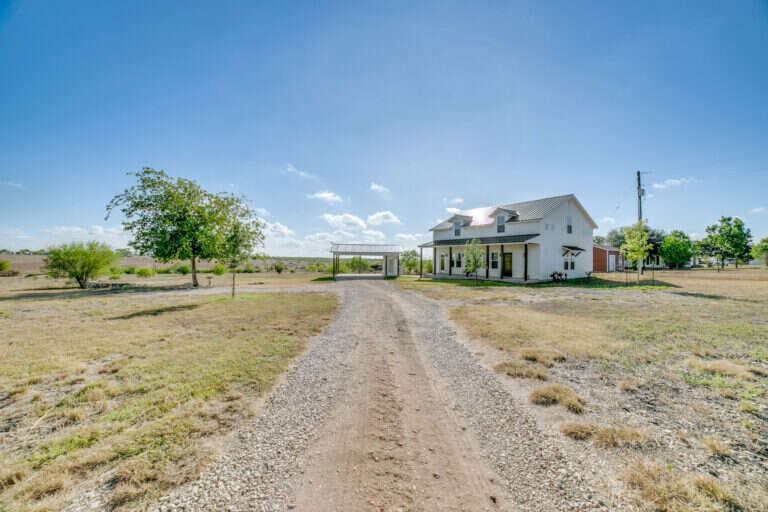
Asking price $899,000 · Closed July 2023
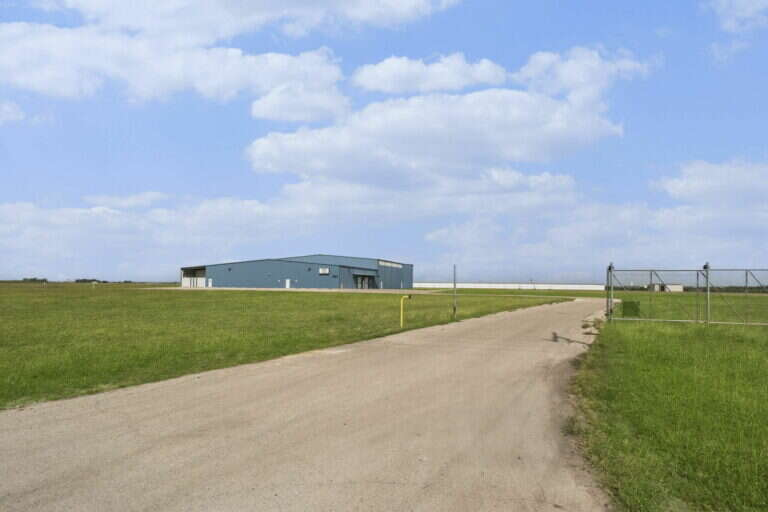
Asking price $2,000,000 · Closed September 2025
The market reports for this kind of property.
We also work these.
What is changing in Texas land, water and growth, explained for owners, not insiders.

TxDOT taking part of your Texas land? See what the state pays for, which losses it doesn't count, how the process runs, and when…

Selling a Texas shopping center? See how a careful buyer rebuilds your income, which fixes can pay off, and how to handle tenant estoppels…

Buying your first Texas shopping center? See how vacancy, taxes and loan terms can turn a 7.5% return into 5%, and what to check…

A 15-minute call. Tell him what you own or what you want to buy. He will tell you what he sees, good and bad. No cost, no pressure.
Talk to Rexor call 210-823-3721
We Are Ready To Help You In Making Smart Real Estate Decisions
Whether you have questions about commercial real estate, need advice on your next investment, or are ready to take the next step, we’re here to help. At Blue Collar Commercial Group of New Braunfels, we pride ourselves on providing personalized, expert guidance at every step. Fill out the contact form, and we’ll get back to you promptly to discuss how we can work together to achieve your goals. Let’s start the conversation today!
Local commercial real estate news and new listings, once a month.