
SoldIndustrial
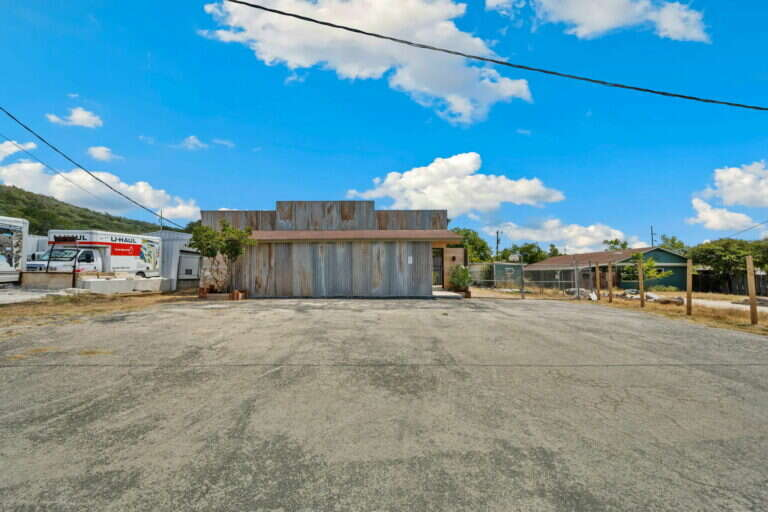
186 Julius Dr, Canyon Lake
Asking price $369,000 · Closed March 2025
Industrial for Buyers in San Antonio & New Braunfels Metro
Talk to Rex about industrialWhen you acquire an industrial building or yard, you need to know how the property functions under actual operational strain before you sign a contract. We walk the physical improvements across New Braunfels, Schertz, and San Marcos to verify power service, heavy transport access, and utility capacity before you submit an offer. Our team reviews county deed filings, surveys drainage easements, and inspects grade-level doors to confirm the asset supports your planned use. Tell us what your operation or investment requires, and we will identify facilities that fit your operational criteria.
Industrial buyers are ultimately buying a tenant’s lease and a building’s specs — income first, structure second. Whether an acquisition targets a distribution warehouse, a light manufacturing facility, or a multi-tenant flex park, the physical characteristics dictate long-term value and operational suitability. Assessing structural clear height, dock configurations, three-phase electric supply, and secure outside storage determines whether an asset can support modern industrial operations or attract stable commercial occupants.
In Comal County and along the I-35 and Highway 46 corridors, regional freight access and municipal utility service vary sharply from one parcel to the next. We verify water capacity through local utility providers, inspect caliche base depth on industrial yards, and check municipal zoning and county plat records to confirm permissible uses. Our approach cuts through surface-level marketing to establish the practical operating condition and income reality of the real estate before capital is committed.
Purchasing industrial property allows businesses and investors to secure functional real estate supported by durable commercial demand. Across the corridor between San Antonio and Austin, industrial assets benefit from proximity to major interstate routes, growing regional distribution networks, and steady industrial service requirements. Capital placed into well-located industrial facilities provides tangible control over operational space or predictable revenue streams generated by contractual commercial leases.
Every acquisition carries structural considerations that require disciplined underwriting. Maintenance responsibilities, future capital expenditures on roofing and slab foundations, and changing municipal regulations can influence overall holding costs over a ownership cycle. Evaluating tenant creditworthiness, replacement costs, and alternative tenant demand ensures buyers balance steady long-term upside against capital reinvestment requirements.
Industrial facilities often operate under NNN lease structures where tenants pay for property taxes, building insurance, and routine operational maintenance directly. This lease arrangement insulates property owners from day-to-day operating expense shifts and produces dependable net operating income throughout the lease term. The simplicity of these lease agreements reduces ongoing property management overhead compared to other commercial asset classes. Securing long-term contractual income from dependable occupants provides defensive stability during shifting economic cycles.
Acquiring an industrial facility provides business owners direct control over operational overhead while converting monthly rent checks into accumulated property equity. Owning the underlying real estate prevents forced business relocations, protects company investments in heavy equipment installations, and gives leadership full authority over facility expansions. Furthermore, businesses that hold their own properties build balance sheet value that strengthens borrowing capability for equipment or operations. Establishing long-term facility control ensures business owners capture appreciation driven by regional economic activity.
Industrial spaces feature utilitarian build-outs that require substantially lower tenant improvement allowances during lease turnover than office or retail spaces. Most industrial users require functional floor space, adequate power, and clear interior heights rather than expensive finishes or bespoke interior layouts. When an industrial tenant departs, preparing the warehouse for a replacement tenant typically involves minor slab cleaning and overhead door servicing. This lower turnover expense directly preserves investor cash reserves and shortens the downtime between leasing cycles.
Properties located along primary transportation routes like the I-35 corridor and Highway 46 provide direct logistical access to regional distribution networks. Proximity to freight arteries reduces transportation drive times for suppliers, field service teams, and regional delivery fleets. Properties situated near growth nodes in Comal, Hays, and Guadalupe counties continue to see sustained commercial and trade contractor requirements. Owning real estate along verified logistics corridors protects your competitive position and sustains secondary resale demand.
Purchasing industrial real estate opens opportunities for commercial property owners to claim ongoing depreciation allowances and perform cost segregation studies. Writing off personal property components, exterior paving, and specialized building systems against taxable income can improve after-tax cash distribution yields. When acquiring replacement properties, eligible investors can also defer capital gains through a 1031 exchange subject to IRS rules. Preserving capital through allowable tax mechanisms reinforces the long-term compounding strength of an industrial real estate portfolio.
Acquiring industrial real estate presents technical and regulatory hurdles that do not exist in standard commercial asset transactions. Assessing environmental records, verifying electric utility capacities, and inspecting the structural capacity of concrete slabs require specialized operational knowledge. Overlooking utility easements or underestimating vehicle turning radius requirements can render an expensive commercial site unusable for a buyer’s core operational needs.
We help buyers identify and resolve these operational roadblocks early in the acquisition process. Our team coordinates on-site technical inspections, contacts utility co-ops directly to confirm feeder line capacities, and reviews historical property uses to uncover unrecorded restrictions. Thorough front-end due diligence protects your acquisition budget from unforeseen engineering fixes and regulatory delays.
Many commercial properties lack the heavy electrical service or public utility hookups required for manufacturing, machinery operation, or cold storage. Expanding electrical capacity often requires costly transformer additions, panel upgrades, and multi-month utility company approvals that disrupt operational schedules. Without direct confirmation from electrical providers, a buyer may purchase a facility that cannot run their primary machinery. We verify available amperage, voltage, and substation capacity directly with local service providers before contract closing.
Industrial sites with histories of manufacturing, vehicle maintenance, or chemical handling can harbor soil and groundwater contamination risks. Under commercial real estate statutes, new property owners can be held responsible for remediation expenses regardless of when environmental contamination occurred. Omitting a thorough Phase I Environmental Site Assessment during the diligence window leaves the buyer exposed to substantial regulatory cleanup costs. We direct environmental diligence to ensure potential historical contamination issues surface prior to closing.
Inadequate turning space, shallow truck courts, and steep property approach angles frequently restrict full-size tractor-trailers from accessing warehouse docks. Sites that look spacious on a plat map may feature restrictive utility easements, narrow entrance gates, or low-hanging lines that block transport trucks. Operational bottlenecks caused by poor truck circulation lower tenant retention and complicate internal shipping operations. We measure turning radiuses and verify curb cut clearances on site to confirm freight vehicles can maneuver without obstruction.
Municipalities and master-planned commercial parks regularly enforce strict ordinances that restrict outside equipment storage, heavy fabrication, or overnight truck parking. Even within unincorporated county land, private deed restrictions or watershed rules can severely constrain outdoor storage yards and material staging. Failing to catch these limitations early can prevent a contractor or logistics company from utilizing the exterior acreage they paid for. We pull municipal development codes and county deed records to confirm that outdoor storage uses are fully permitted.
Texas Hill Country terrain often requires substantial stormwater drainage allowances, retention basins, and regional runoff easements that encumber usable yard space. An industrial parcel that appears buildable may carry underground drainage lines, pipeline right-of-ways, or steep terrain slopes that prevent building expansion. Discovering an unrecorded utility easement after funding can permanently halt future warehouse additions or perimeter security fencing. We examine land title commitments and boundary surveys to map the true usable footprint of the acreage.
Thorough physical and financial due diligence separates a successful industrial investment from a troubled property purchase. Evaluating an asset requires a detailed review of structural metrics, site circulation parameters, utility service agreements, and tenant lease rolls. Every physical dimension, from slab thickness to interior ceiling clearances, dictates the type of tenant that can occupy the space and the volume of revenue the building can generate.
We walk every corner of an industrial property with a practical eye toward operational capacity, inspecting dock levelers, roof membranes, and site drainage patterns. We examine the rent roll against actual lease documents, review real property tax assessments, and inspect yard surfaces to establish true capital expense requirements. This methodical diligence approach provides clear visibility into property performance before purchase contingencies expire.
Interior vertical clearance determines warehouse cubic volume, racking configuration, and vertical storage capacity for modern distribution tenants. Facilities with low clear heights limit operational efficiency and restrict the building to basic assembly or trade storage uses. Clear height measurements must be confirmed from the concrete slab to the lowest overhead structural beam, light fixture, or sprinkler line. Confirming vertical clearance ensures the building can support modern vertical inventory systems.
An industrial facility must provide the appropriate balance of grade-level drive-in doors and dock-high loading positions for its tenant profile. Trade contractors and light assembly users typically require drive-in bay doors, while regional freight handlers depend on dock-high doors equipped with levelers and dock seals. Inspecting door dimensions, structural header conditions, and mechanical door operators avoids costly post-acquisition retrofits. Verifying functional loading setups confirms the facility can handle standard transport equipment without modifications.
Heavy machinery, manufacturing presses, and multi-tier warehouse racking place immense structural loads on interior concrete foundations. Substandard slab depth, uneven leveling, or unaddressed foundation settlement will crack under forklift traffic and prevent heavy equipment installation. Reviewing building structural plans and inspecting expansion joints surfaces historical movement or structural integrity concerns. Confirming slab load capacity protects your capital from catastrophic foundation repairs or load-related operational restrictions.
Properties featuring exterior commercial acreage must have adequate base stabilization to support heavy vehicles without sinking or rutting. Unstabilized soil, thin gravel covers, or deteriorating caliche quickly degrade during rainy periods, causing service vehicle damage and costly downtime. Inspecting base compaction depth, perimeter security fencing, and exterior site lighting verifies whether the yard is immediately functional. Proper yard condition confirms that outside storage and fleet staging can commence without immediate ground improvements.
The class and capacity of a building's fire sprinkler system determine the combustibility and stacking height of inventory permitted inside the structure. Facilities lacking high-density fire suppression cannot accommodate tire storage, flammable goods, or tightly racked commodities without major utility upgrades. Checking municipal water main pressure and flow rates ensures the fire line delivers adequate volume to meet commercial code standards. Verifying suppression system ratings confirms whether prospective tenants can operate under municipal fire regulations.
When purchasing an income-generating warehouse, the value of the asset is tied directly to the credit quality and contract terms of the occupying tenant. Reviewing lease agreements establishes who covers property taxes, roof replacement responsibilities, insurance premiums, and common area expenses. Securing estoppel certificates and examining corporate parent guaranty documents confirms that the reported rent payments match actual collected figures. Verifying tenant stability protects your expected net cash flow from unbudgeted collection defaults.
Purchasing commercial industrial real estate demands a structured approach that aligns physical facility requirements with sound financial modeling. From clarifying operational requirements to closing the transaction, every phase requires focused diligence and local market perspective. Moving through each milestone systematically prevents wasted capital on unworkable properties and keeps your acquisition on schedule.
Blue Collar Commercial Group applies a hands-on methodology to every industrial purchase, guiding clients through technical inspections and municipal approvals. We handle direct property walks, coordinate with local civil engineers and surveyors, and negotiate protective contract terms designed to shield your capital. Our advisory process keeps you fully informed across every phase of the acquisition.
We meet directly to define your primary operational requirements, investment criteria, capital constraints, and long-term hold strategy. We review power specifications, required clear heights, yard storage square footage, and targeted transit access to build a clear property profile. Establishing these operational parameters early prevents spending time touring facilities that fail your technical standards. A focused property profile ensures that every prospective property directly supports your business model.
We examine active, off-market, and newly developed industrial properties across Comal, Hays, and Guadalupe counties to identify viable candidates. We analyze local utility capacities, compare regional commercial sales comps, and assess transit connectivity across the I-35 corridor. By examining current municipal zoning and utility co-op infrastructure, we filter out parcels burdened by unworkable operating restrictions. This detailed market evaluation identifies facilities with durable utility and realistic pricing.
Once target assets are identified, we perform comprehensive financial underwriting that accounts for property taxes, expected insurance costs, and capital expenditures. We evaluate whether property income covers the loan payment with room to spare if vacancy occurs, and we plan cash reserves for post-closing requirements. For owner-occupants, we compare the financial impact of purchasing versus leasing within the target submarket. Disciplined underwriting confirms that the target facility meets your investment thresholds before drafting offers.
We schedule and conduct detailed physical property inspections, walking the entire perimeter, warehouse floor, and mechanical utility infrastructure. We inspect truck court turning room, grade-level doors, electrical disconnect panels, and soil stability across outdoor storage yards. We look past aesthetic staging to check roof condition, structural slab integrity, and surrounding neighborhood commercial traffic patterns. Physical walkthroughs confirm whether the real estate matches the technical claims presented on sales brochures.
We draft custom letters of intent and purchase contracts that incorporate protective contingency timelines, earnest money protections, and clear seller document requirements. We negotiate directly on purchase price, inspection periods, tenant estoppel delivery dates, and required seller repairs. Our focus remains on structuring favorable deal points that leave adequate time to conduct environmental and engineering investigations. Strategic contract terms protect your earnest deposit while maintaining a path toward transaction execution.
During the formal feasibility period, we oversee the review of title commitments, boundary surveys, Phase I environmental assessments, and property condition reports. We coordinate with municipal inspectors, verify tax reassessment impacts, and review existing tenant lease files to confirm accurate accounting. We work closely with your legal counsel and commercial lender to confirm all title exceptions and loan documents are satisfied before funding. Thorough diligence oversight confirms a clean property transfer and protects your capital at the closing table.
Industrial real estate serves distinct buyer groups ranging from local trade businesses securing their operating base to institutional investors placing capital into income-producing assets. Each buyer profile brings specific return objectives, risk tolerances, and physical facility needs to the acquisition table. Tailoring our property search to your specific business profile ensures we source real estate that matches your operational requirements.
Our advisory practice works with operators and investors across the Texas Hill Country who value practical utility and verified property data. Whether you are expanding a contracting fleet or redeploying commercial equity, we structure transactions that reflect your operational goals. Understanding your commercial profile helps us locate assets that protect and grow your capital.
Business owners moving out of leased spaces or transitioning capital from residential rental portfolios into commercial industrial real estate. These buyers need straightforward guidance on commercial contract timelines, post-closing cash reserve planning, and third-party facility maintenance requirements. We help them evaluate whether building revenue comfortably handles debt service and guide them through physical diligence to avoid unforeseen structural expenses. Practical guidance provides the clarity needed to complete a first commercial acquisition with confidence.
Plumbing, electrical, HVAC, roofing, and general contracting companies that require warehouse staging combined with secure outside equipment storage yards. These buyers prioritize stabilized caliche or concrete parking, drive-in bay doors, and direct access to arterial highways like Highway 46. We locate properties with clear municipal zoning allowances for equipment parking, service truck storage, and material fabrication. Securing a dedicated operational facility protects contracting businesses from rising commercial rents and urban redevelopment pressures.
Commercial real estate owners redeploying capital out of actively managed properties into passive, income-producing industrial assets to defer capital gains liabilities. These investors seek single-tenant NNN facilities or multi-tenant warehouse parks supported by reliable regional tenant leases. We target properties that fit statutory exchange timelines, verify tenant lease estoppels, and analyze long-term renewal options. Securing stable net-leased real estate allows exchange buyers to preserve their principal while reducing ongoing operational management burdens.
Logistics providers and e-commerce distribution firms that require modern clear heights, multiple dock-high loading positions, and deep truck courts. These buyers focus on proximity to major highway interchanges, freight travel times, and high-volume transport access along the I-35 corridor. We evaluate regional traffic patterns, turning radiuses, and structural clear heights to ensure the facility meets freight throughput standards. Sourcing well-configured distribution assets protects the operational speed and delivery commitments of expanding logistics companies.
Companies requiring heavy three-phase electrical power, specialized compressed air lines, floor drainage, and dedicated office components. These buyers need spaces that permit light industrial fabrication without violating local municipal noise, odor, or emissions codes. We verify substation power capacities directly with regional electric utilities and inspect municipal water hookup agreements before purchase commitments are made. Securing an appropriately equipped manufacturing site prevents production disruptions and expensive electrical retrofits.
Acquiring industrial real estate involves navigating complex environmental evaluations, financing structures, and physical infrastructure checks. Buyers frequently encounter questions regarding power availability, zoning permissions, and required post-closing capital reserves. Having direct, practical answers to these critical deal questions allows buyers to make informed acquisition decisions with confidence.
We provide straightforward answers backed by county records, utility data, and hands-on commercial experience. Review the common acquisition questions below to understand key considerations before touring industrial facilities or entering purchase negotiations. If you have a specific property scenario, our team is available to review your details.
Industrial properties prioritize functional physical infrastructure—such as clear height, three-phase power, and heavy truck access—whereas retail properties depend heavily on street visibility, foot traffic, and consumer parking ratios. Industrial buildings typically require substantially lower tenant improvement allowances during lease turnover, as incoming users rely on utilitarian warehouse space rather than custom customer-facing build-outs. Additionally, industrial leases frequently operate under net structures that place routine maintenance and operating costs on the tenant, reducing hands-on property management compared to retail assets.
A Phase I Environmental Site Assessment is an exhaustive professional study of a property’s historical uses, adjoining properties, and regulatory records to identify potential hazardous substance contamination. Under commercial real estate liability laws, a property buyer can become legally responsible for existing soil or groundwater contamination even if the contamination occurred under previous ownership. Completing this assessment during your contractual feasibility period protects you under federal landowner liability protections and satisfies standard commercial lender financing requirements.
Verifying electrical capacity requires inspecting the on-site main distribution panels to determine available amperage, voltage, and phase configurations, rather than relying solely on marketing flyers. If your operation requires heavy machinery or three-phase power, we contact the local electric co-op or municipal utility provider to confirm transformer capacity and local substation capabilities. Discovering power shortages after closing can trigger substantial capital expenses for new transformers, panel retrofits, and extended utility interconnection delays.
Buyers should maintain sufficient liquid capital in reserve following closing to cover unanticipated mechanical repairs, roof maintenance, and debt service coverage during potential tenant turnover. Even with net lease agreements, property owners remain responsible for long-term capital replacements such as structural slab repairs, roof membrane replacements, and site stormwater infrastructure. Prudent industrial underwriting confirms that the property’s operating income covers loan payments with room to spare while preserving adequate post-closing liquidity.
Permissible outside storage depends on municipal zoning ordinances, county plat notes, and private deed restrictions that govern the specific property. Many incorporated cities and master-planned industrial parks require full perimeter screening, restrict the vertical height of stored materials, or ban outdoor staging entirely. In unincorporated county land, private deed restrictions or environmental watershed regulations can also limit outdoor storage acreage. We review municipal codes and title documents prior to purchase to confirm your outdoor operational plans are legally compliant.
While Texas is a non-disclosure state that does not require public recording of sales prices, local county appraisal districts review commercial transfer deeds and reassess property valuations based on prevailing market activity. A newly recorded sale can prompt the appraisal district to adjust the property’s taxable value upward toward current acquisition valuation, which increases annual property taxes. When underwriting an acquisition, buyers must calculate future tax liabilities using updated assessment projections rather than relying solely on the seller’s historical tax bills.
Clear height measures the usable vertical clearance from the finished floor slab to the lowest structural obstruction, determining how high a tenant can rack inventory. Modern distribution and logistics operators require taller clear heights to maximize cubic storage volume and lower their cost per pallet position. Facilities with lower vertical clearances are restricted to light assembly, trade workshops, or basic dead storage, which limits the tenant pool and influences rental rates. Evaluating clear height confirms whether a building can support modern vertical inventory systems or attract regional distribution tenants.
A 1031 exchange allows commercial real estate investors to defer capital gains and depreciation recapture taxes by reinvesting sale proceeds into like-kind commercial replacement property. The exchange process runs on strict statutory deadlines that begin immediately upon closing the relinquished property sale, and missing these deadlines terminates the tax deferral. A Qualified Intermediary must be formally engaged prior to closing your sale to hold transaction proceeds, and your CPA can confirm the specifics for your position.
Each sale shows the asking price, and the closing date when we have it.
Asking price $369,000 · Closed March 2025
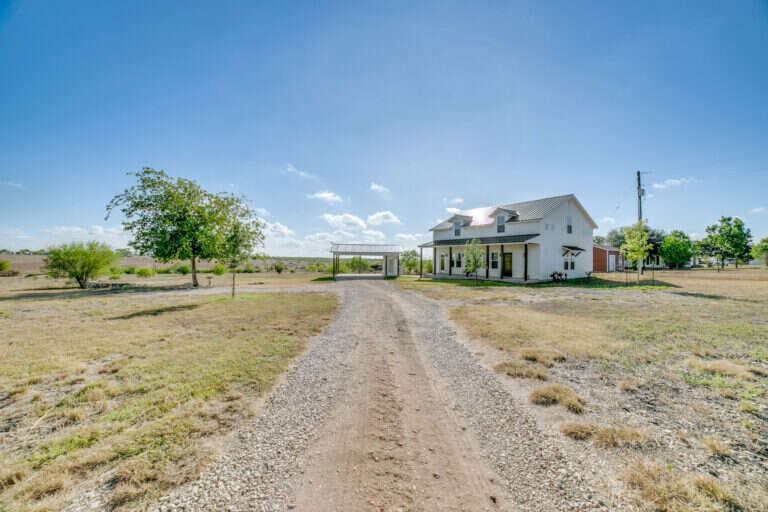
Asking price $899,000 · Closed July 2023
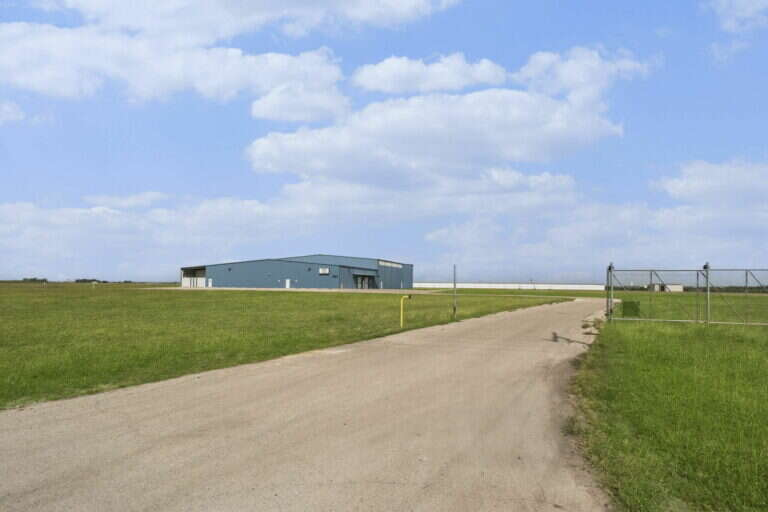
Asking price $2,000,000 · Closed September 2025
The market reports for this kind of property.
We also work these.
What is changing in Texas land, water and growth, explained for owners, not insiders.

TxDOT taking part of your Texas land? See what the state pays for, which losses it doesn't count, how the process runs, and when…

Selling a Texas shopping center? See how a careful buyer rebuilds your income, which fixes can pay off, and how to handle tenant estoppels…

Buying your first Texas shopping center? See how vacancy, taxes and loan terms can turn a 7.5% return into 5%, and what to check…

A 15-minute call. Tell him what you own or what you want to buy. He will tell you what he sees, good and bad. No cost, no pressure.
Talk to Rexor call 210-823-3721
We Are Ready To Help You In Making Smart Real Estate Decisions
Whether you have questions about commercial real estate, need advice on your next investment, or are ready to take the next step, we’re here to help. At Blue Collar Commercial Group of New Braunfels, we pride ourselves on providing personalized, expert guidance at every step. Fill out the contact form, and we’ll get back to you promptly to discuss how we can work together to achieve your goals. Let’s start the conversation today!
Local commercial real estate news and new listings, once a month.